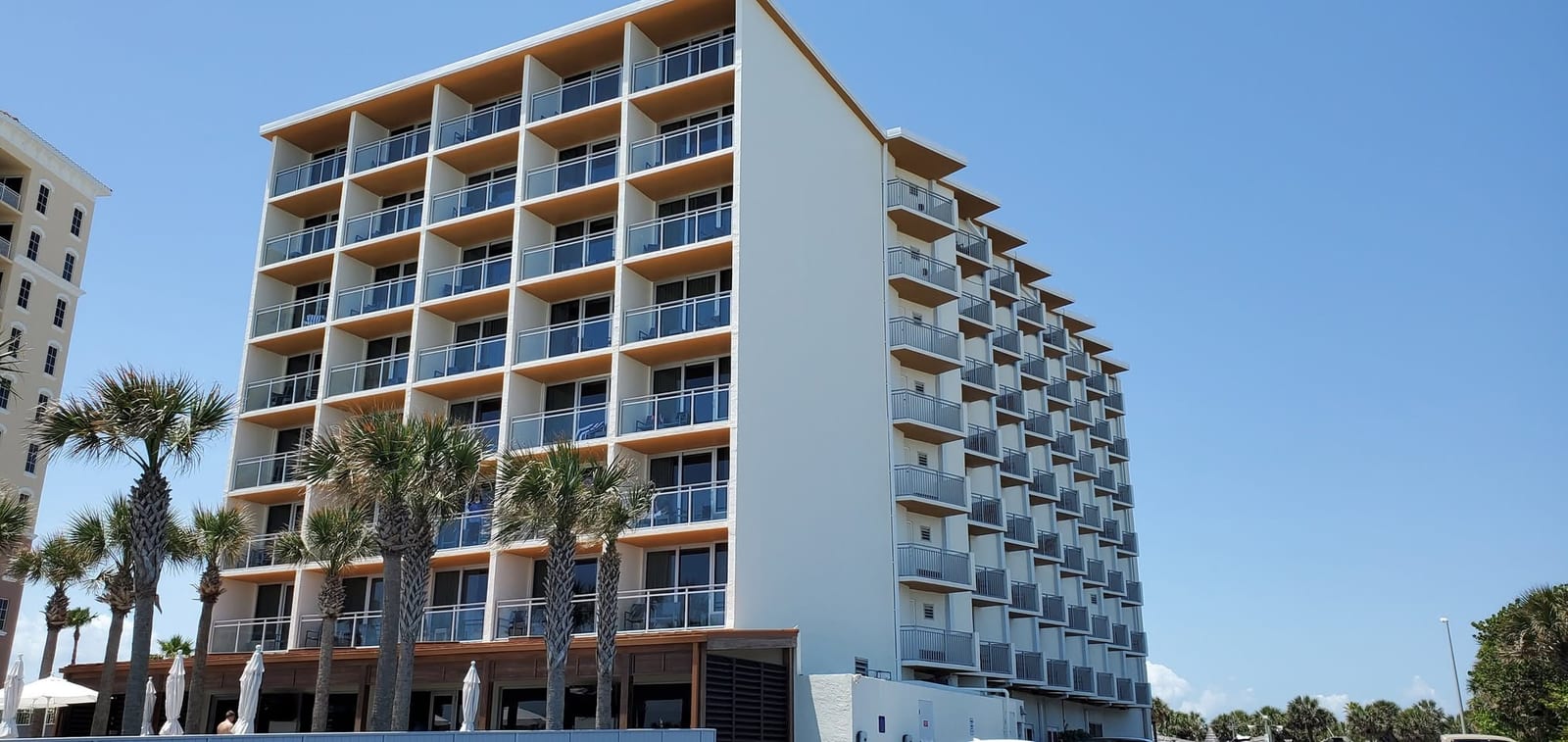
Conquering the 31-Degree High Banks at Dusk
Few sensations in global motorsport can match the raw adrenaline of dropping down the steep high-bank transition onto the tri-oval frontstretch of Daytona International Speedway just as the sun dips below the horizon and the colossal stadium lighting towers roar to life.
In May 2022, Maureen and I loaded up our track gear and headed south to Florida to participate in day two of the SCCA Track Night in America at Daytona (SCCA Track Night). Track Night in America has fundamentally revolutionized grassroots high-performance driver education (HPDE). By condensing the traditional multi-day weekend track format into an approachable, late-afternoon and evening program, the Sports Car Club of America created a welcoming, low-intimidation gateway for drivers of every skill level—from daily-driven street cars to purpose-built endurance track weapons.
Running the full 3.56-mile Daytona sports car road course—the exact layout conquered during the Rolex 24 at Daytona—is a sacred experience for any serious driver. Experiencing it from the driver’s seat of our 6th-generation Chevrolet Camaro SS 1LE provided an unforgettable masterclass in high-speed chassis dynamics, thermal management, and paddock event logistics.
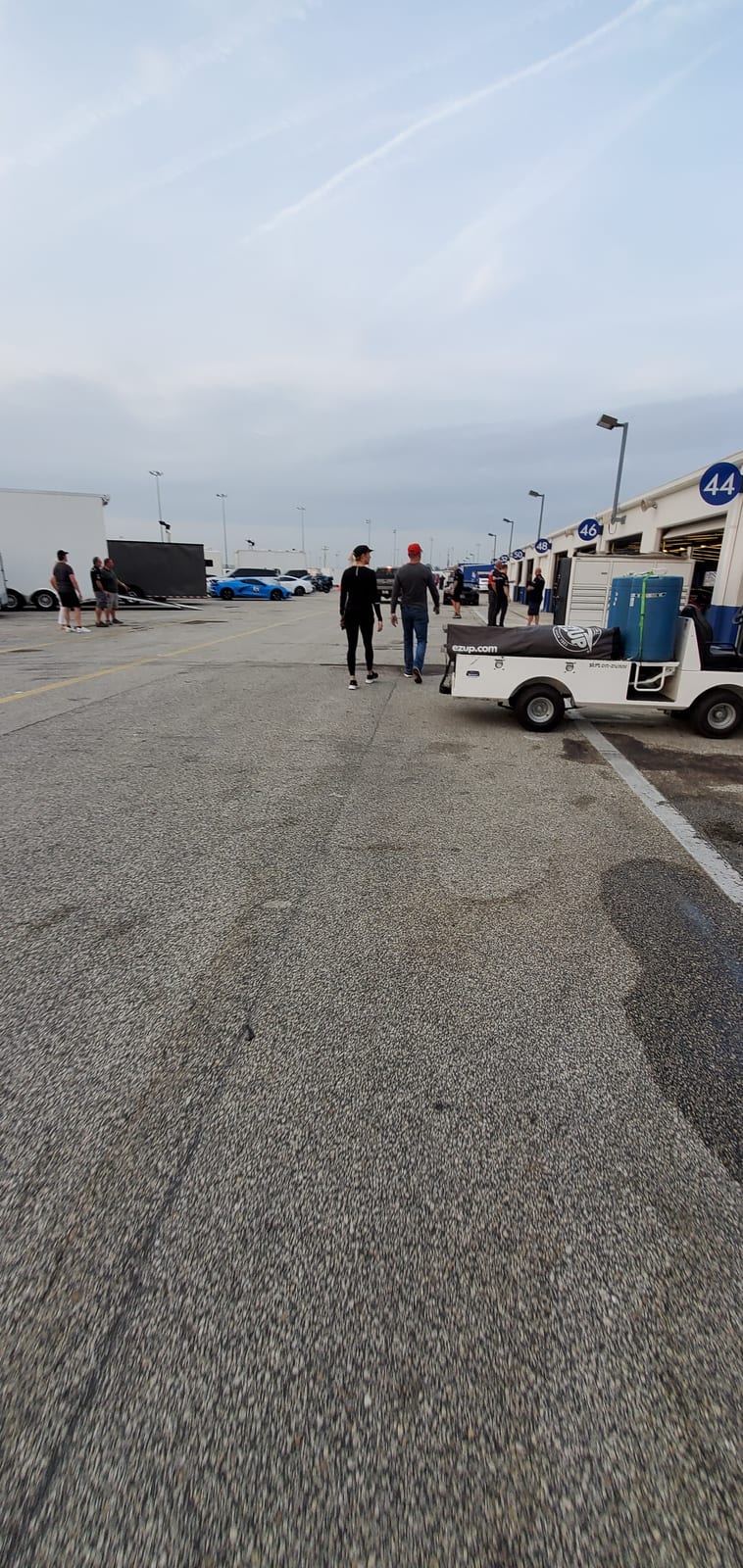 Walking the historic Daytona International Speedway paddock between garage bays 44 through 48: haulers, race haul trailers, and paddock utility vehicles staged for morning track inspections.
The Weapon: 2022 Chevrolet Camaro SS 1LE
The 6th-generation Chevrolet Camaro SS equipped with the factory 1LE Track Performance Package represents one of the finest turn-key, road-course-capable track vehicles ever produced by Detroit. Unlike standard street cars that require thousands of dollars in aftermarket brake upgrades, auxiliary fluid coolers, and suspension modifications before surviving a 20-minute hot session, the 1LE was engineered specifically to endure prolonged track abuse straight from the showroom floor.
Our track configuration centered around:
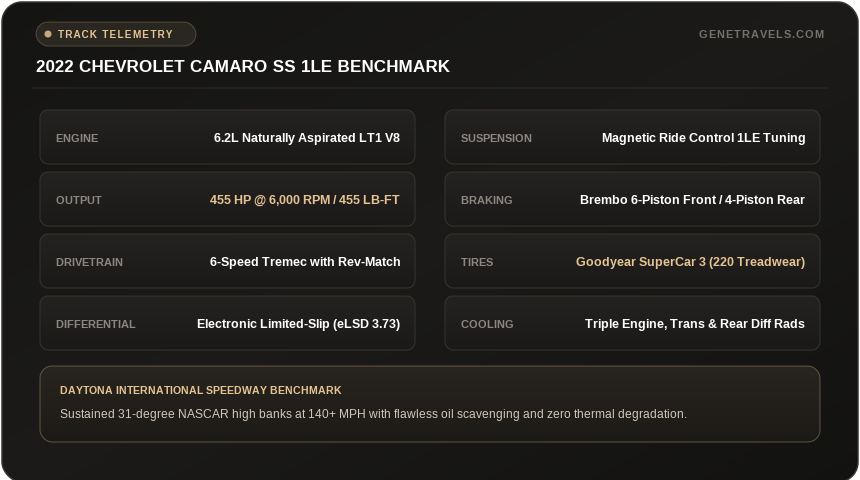
- Powertrain: 6.2-Liter naturally aspirated LT1 V8 producing 455 horsepower and 455 lb-ft of torque, mated to a Tremec 6-speed manual transmission with active rev-matching.
- Track Cooling Architecture: Factory auxiliary engine oil cooler, dual outboard transmission coolers, rear differential cooler, and heavy-duty radiator airflow ducting.
- Braking Hardware: 6-piston monobloc front Brembo calipers clamping massive 14.6-inch two-piece grooved iron rotors, pressurized with high-temp Castrol SRF racing brake fluid.
- Chassis & Drivetrain: Magnetic Ride Control dampers, stiffer front and rear stabilizer bars, electronic limited-slip differential (eLSD) with aggressive track tuning, and wider forged alloy wheels wrapped in extreme-performance summer compound rubber.
Telemetry & High-Bank Dynamics on the 3.56-Mile Road Course
Navigating the 3.56-mile Daytona road course demands respect. The circuit transitions between tight, technical infield corners and flat-out, full-throttle NASCAR banking where sustained centrifugal loads compress the car into the pavement.
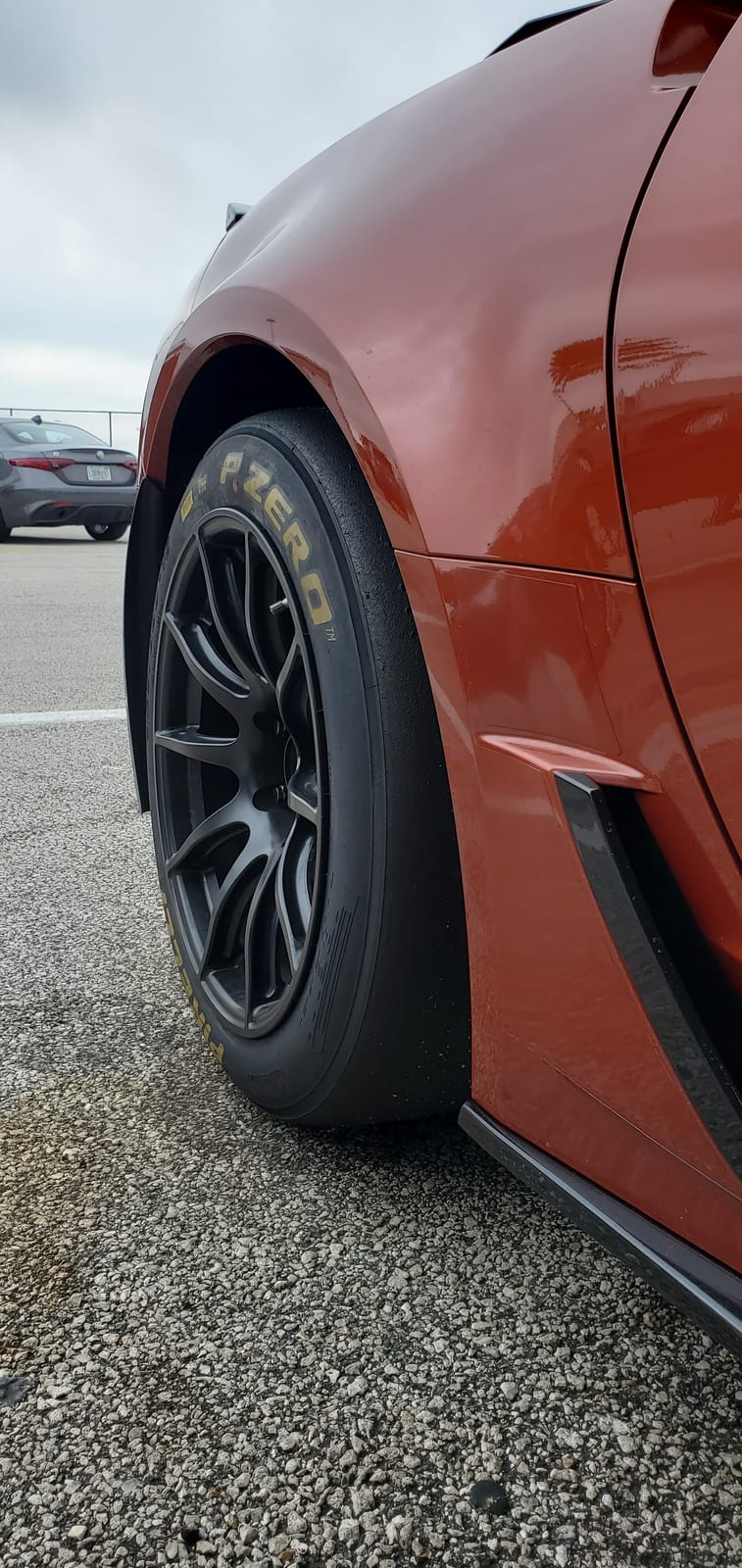 Aggressive rubber and track camber setup in the paddock: proper tire pressure management and bead seating are vital before subjecting sidewalls to Daytona’s 31-degree banking.
1. Infield Braking Threshold: Turn 1 & The International Horseshoe
Blasting past the flag stand on the frontstretch at over 130 mph, the first major braking zone arrives abruptly at Turn 1. Stomping on the Brembo brakes compresses the front suspension as you bleed off immense speed to negotiate the sharp left-hand entrance into the infield.
Downshifting from 4th to 3rd and 3rd to 2nd, the Camaro’s active rev-matching blips the throttle with surgical precision, matching engine revs in milliseconds. This instantaneous throttle blip prevents rear-axle hop or tire drag, ensuring the chassis settles smoothly on corner entry before rotating through the off-camber International Horseshoe.
2. Sustained G-Loads on the NASCAR Banking (Turns 1 to 4)
Exiting the infield through Turn 6, you accelerate hard out onto the 31-degree banking of NASCAR Turn 1. This is where Daytona separates casual sports cars from true track machinery. The transition from flat pavement to 31 degrees of vertical banking hits with a pronounced gravitational compression.
At speeds in excess of 135 mph, sustained lateral and vertical forces exceed 1.1+ Gs, heavily loading the passenger-side dampers, springs, and tire sidewalls. The Camaro’s electronic limited-slip differential (eLSD) actively vectors torque across the rear axle, preventing the car from squirming or hunting as the chassis absorbs the joint seams between the asphalt paving lanes. The car tracks true and arrow-straight, glued to the high line inches from the outside SAFER barrier.
3. The Bus Stop (Le Mans Chicane) & Backstretch Sprint
Accelerating down the 3,000-foot Daytona backstretch in 4th gear, the exhaust note bounces off the outer walls as terminal speeds climb rapidly toward 140+ mph. Approaching the Le Mans Chicane (the “Bus Stop”), you must brake aggressively in a straight line, throw the car over the left curb, balance over the right curb, and power cleanly out over the exit rumble strips before re-entering NASCAR Turns 3 and 4.
Even under prolonged 85°F ambient Florida temperatures and continuous 20-minute hot-lap rotations, the Camaro’s oil and coolant telemetry remained rock solid. Oil temperatures peaked safely below 260°F, and brake pedal travel remained firm and consistent throughout every run.
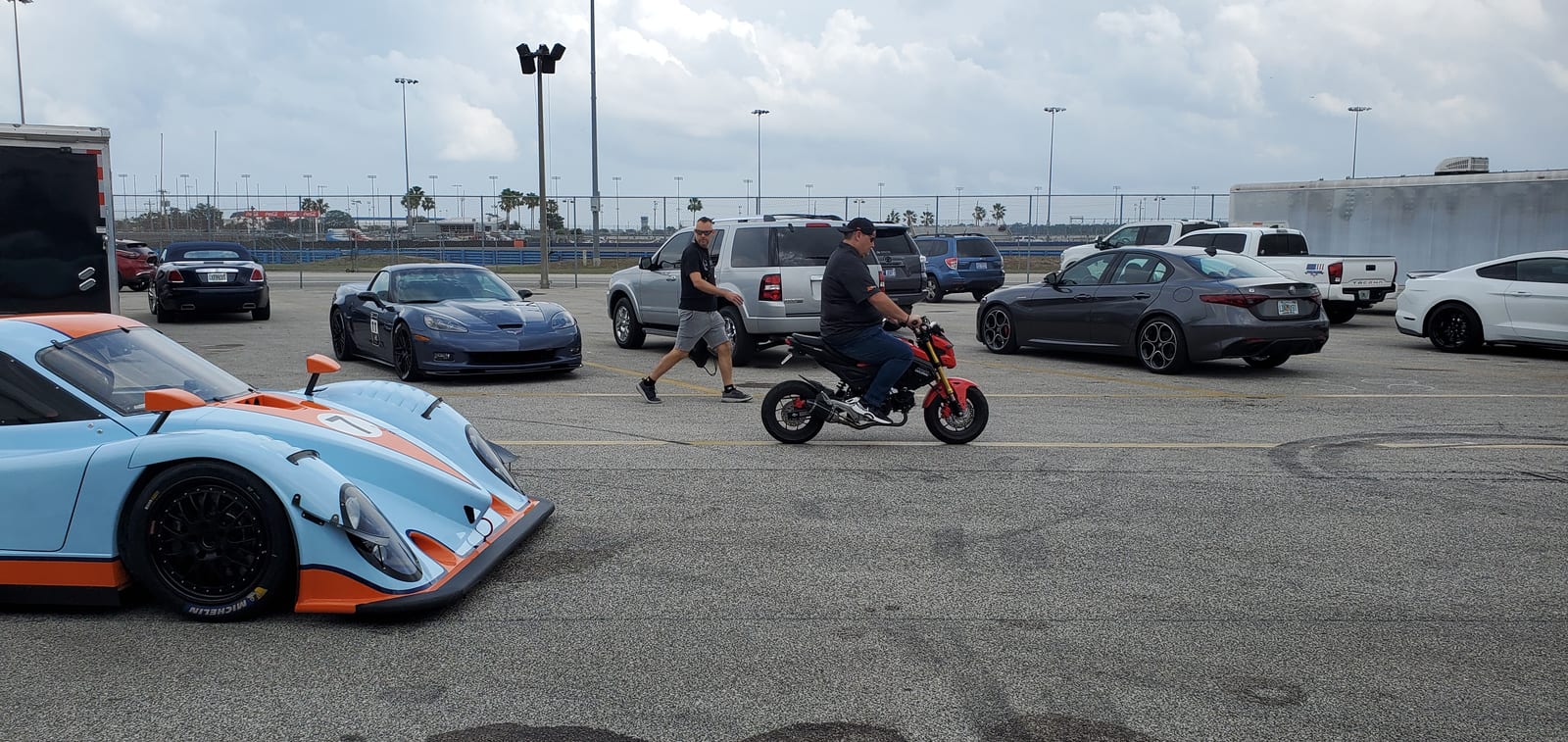 Diverse grassroots grid in the Daytona paddock: a Gulf-liveried sports racer staged alongside Corvettes, sports sedans, and support vehicles between evening run groups.
Observing the Paddock: The Software Gap in Grassroots HPDE
As both an enthusiastic track driver and a 30-year software architect, my mind never stops analyzing operational friction. Between track sessions, while walking the Daytona garages and observing SCCA event staff orchestrate over 120 registered drivers across three run groups (Novice, Intermediate, and Advanced), I noticed a glaring technological bottleneck.
The track day industry relies heavily on outdated tools:
- Paper Clipboards & Static Run Sheets: Staging grid marshals were manually checking off car numbers with dry-erase markers and paper printouts. When a mechanical black flag or mechanical breakdown altered the schedule, communicating time adjustments across 100+ paddock participants was nearly impossible.
- Driver Onboarding Friction: First-time novice drivers were handed paper pamphlets with track maps, point-by passing rules, and flag color descriptions. In an era where drivers operate from smartphones, forcing novices to memorize complex protocols from paper creates unnecessary anxiety and track incidents.
- Tech Inspection Bottlenecks: Manual paper tech inspection forms required volunteers to crawl under cars, verify torque stripes on lug nuts, measure brake pad thickness, and verify Snell SA2015/SA2020 helmet certifications by hand, leading to massive queues at morning check-in.
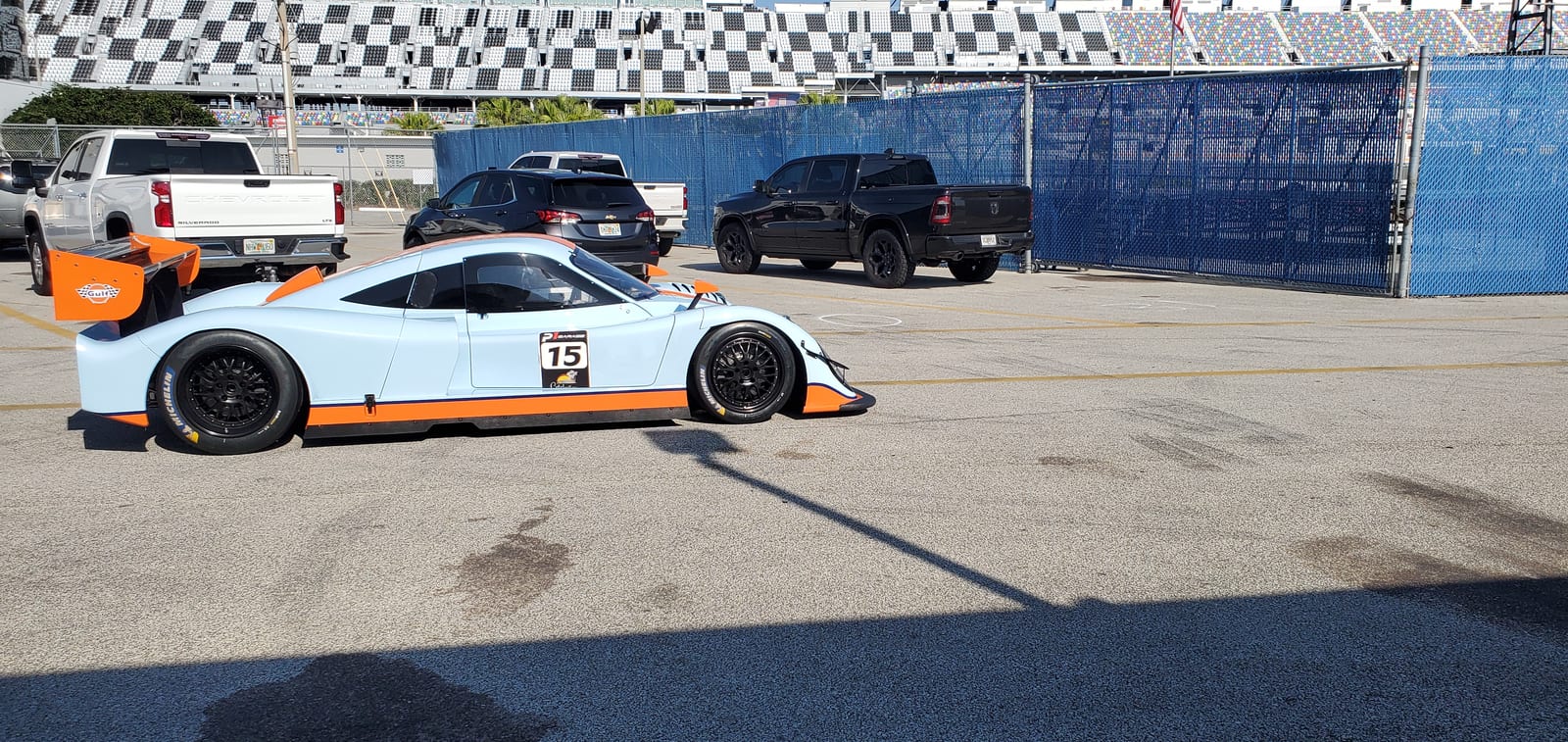 The towering grandstands of Daytona International Speedway overlooking the apron: immense venue scale that demands modernized digital paddock logistics.
The Genesis of GreenTree’s HPDE Software Suite
Standing in the shadow of the Daytona grandstands watching the evening run groups conclude under the floodlights, the architectural blueprint for GreenTree’s motorsport software ecosystem crystallized.
We set out to eliminate paddock friction and modernize grassroots track day operations with an integrated, cloud-native application stack:
drivehpde.app: Driver Onboarding & Telemetry Hub
A dedicated mobile-first platform for HPDE drivers to discover sanctioned events, track their run group promotions (Novice → Solo → Advanced), access pre-track safety checklists, log tire pressure telemetry, and store digital vehicle waivers.trackdayos.app: Organizer Operating System
A tablet-first command dashboard for track day organizations (SCCA, NASA, Chin Track Days, Hooked on Driving). Replaces clipboards with real-time digital grid staging, dynamic run group schedule balancing, push notification delay alerts, and paperless electronic tech inspection sign-offs.racedayos.app: Club Race & Timing Management
Autonomous timing and scoring integration, transponder assignment, pit lane logistics, and digital impound verification for competitive amateur racing series.hpde.tv: Virtual Coaching & Track Walk Video Network
High-definition track orientation videos, virtual corner-by-corner track walks with professional driving coaches, in-car telemetry breakdowns, and digital classroom briefings for first-time drivers.campingandtailgating.com: Speedway Community Command
Supporting the lifestyle and paddock logistics for our 917,000-member community across 51 speedways nationwide, facilitating RV staging, gate logistics, and campsite exchanges.
Field Summary & Final Thoughts
Running Daytona International Speedway under the lights at SCCA Track Night in America was a milestone motorsports memory. The 6th-generation Camaro SS 1LE proved its mettle as an extraordinary, factory-engineered road course machine capable of conquering 31-degree banking with total composure and thermal reliability.
More importantly, that balmy May evening in Daytona reinforced our corporate mission at GreenTree: bringing enterprise-grade modern software architecture to grassroots racing communities. Whether you’re tracking your laps from behind the wheel or orchestrating 150 cars from the flag stand, modern technology elevates the experience for everyone who loves the roar of an engine.
Field photography and telemetry © TrackDayFun.com & GeneTravels.com.