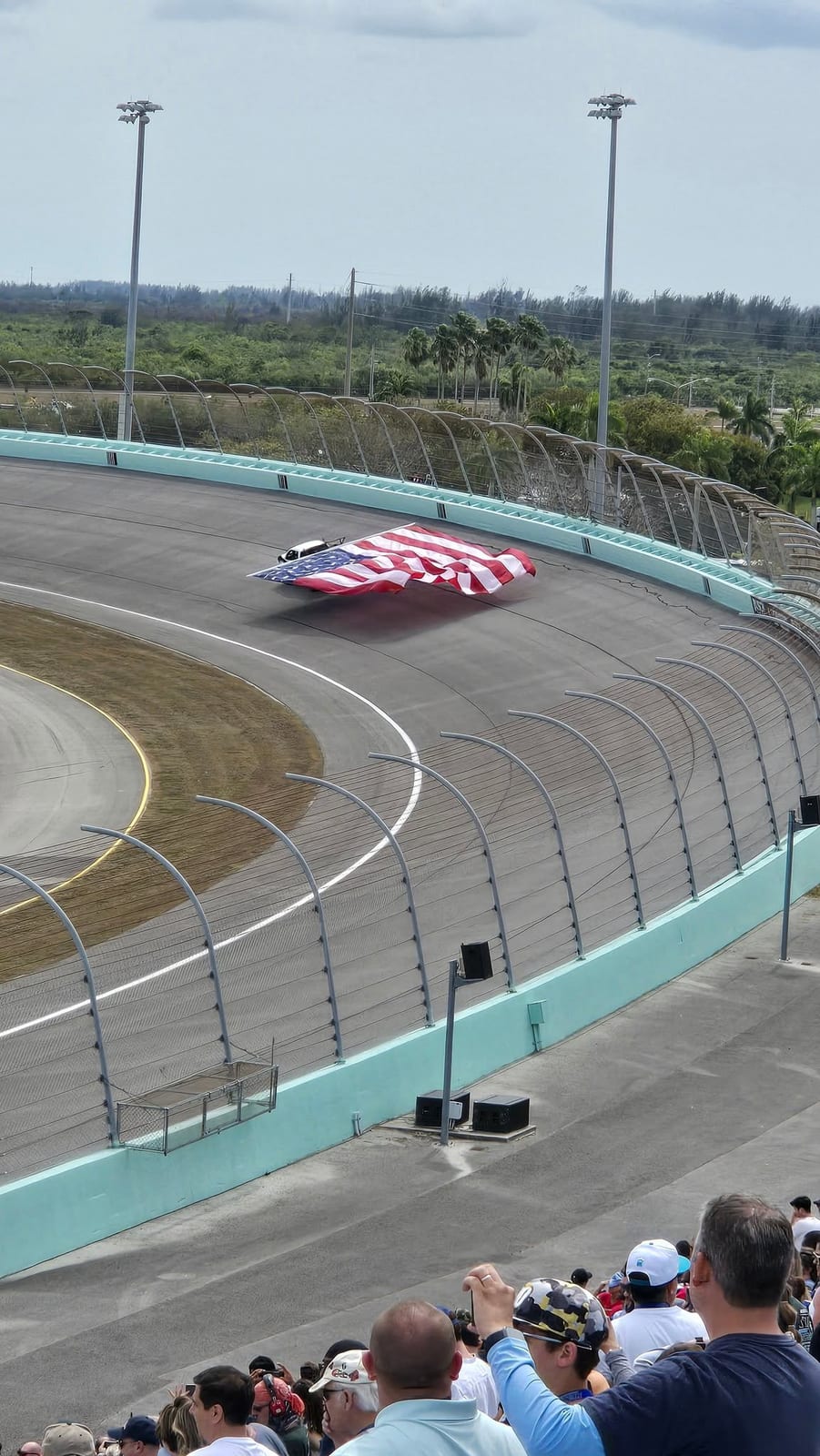
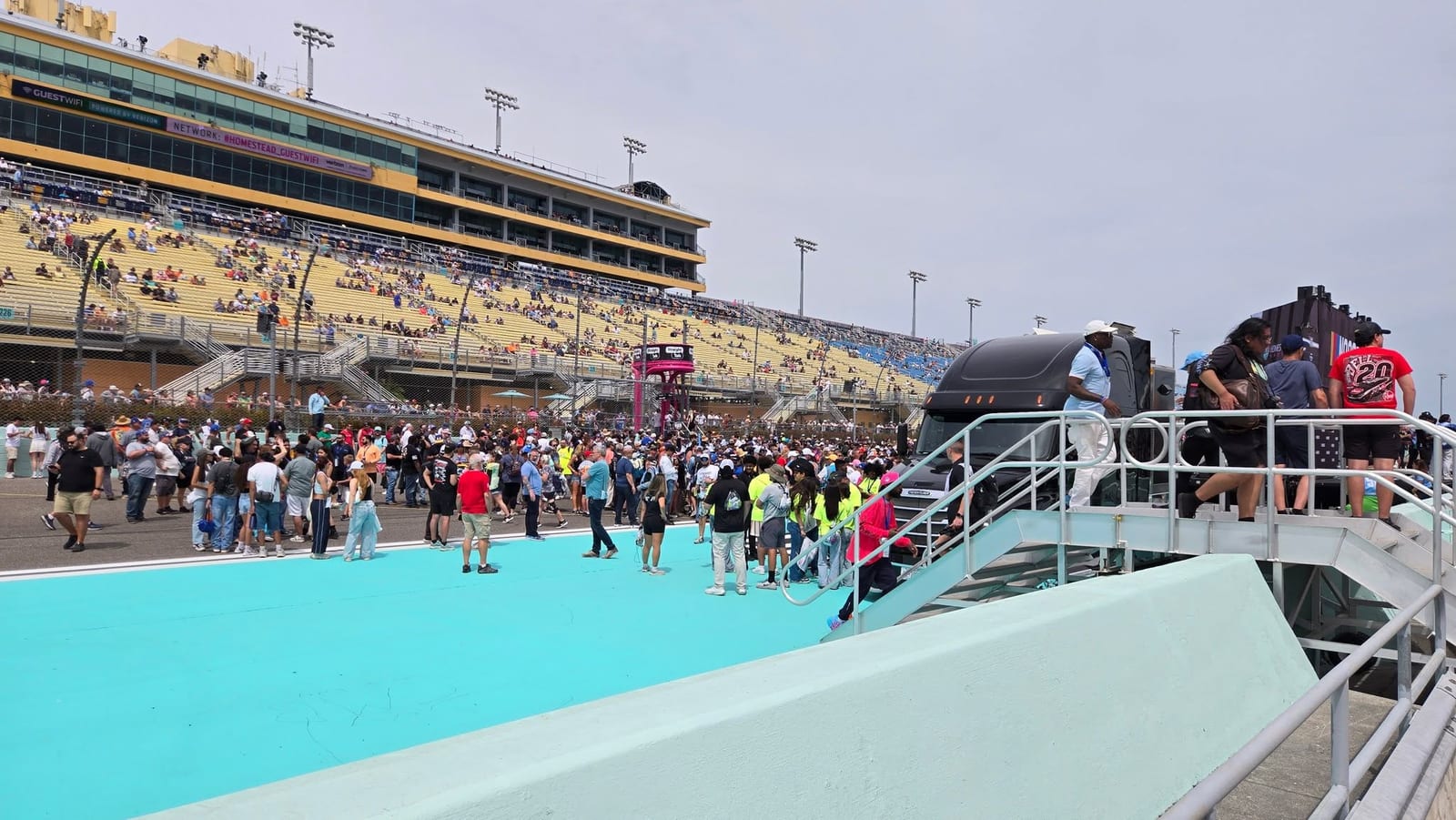
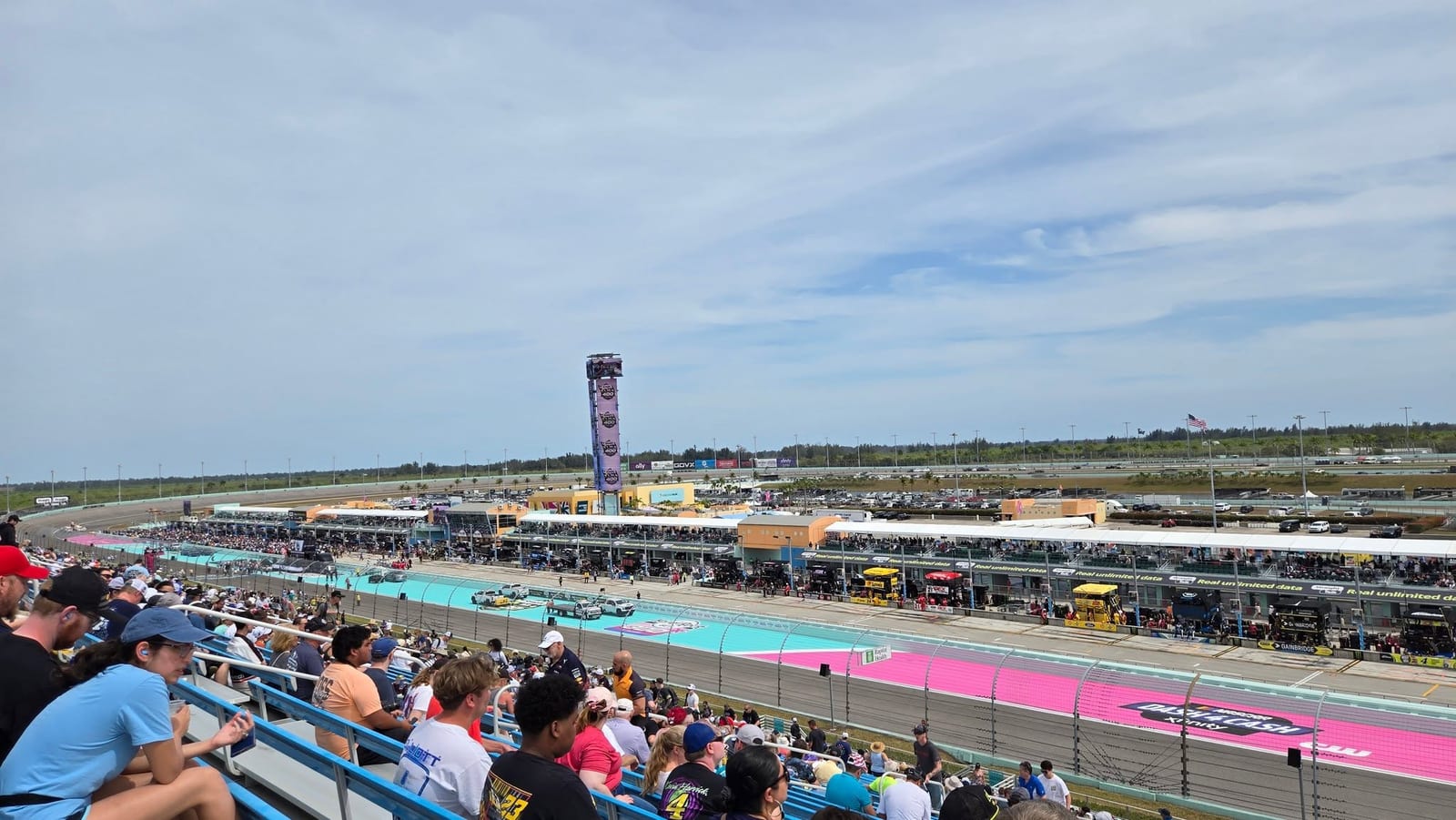
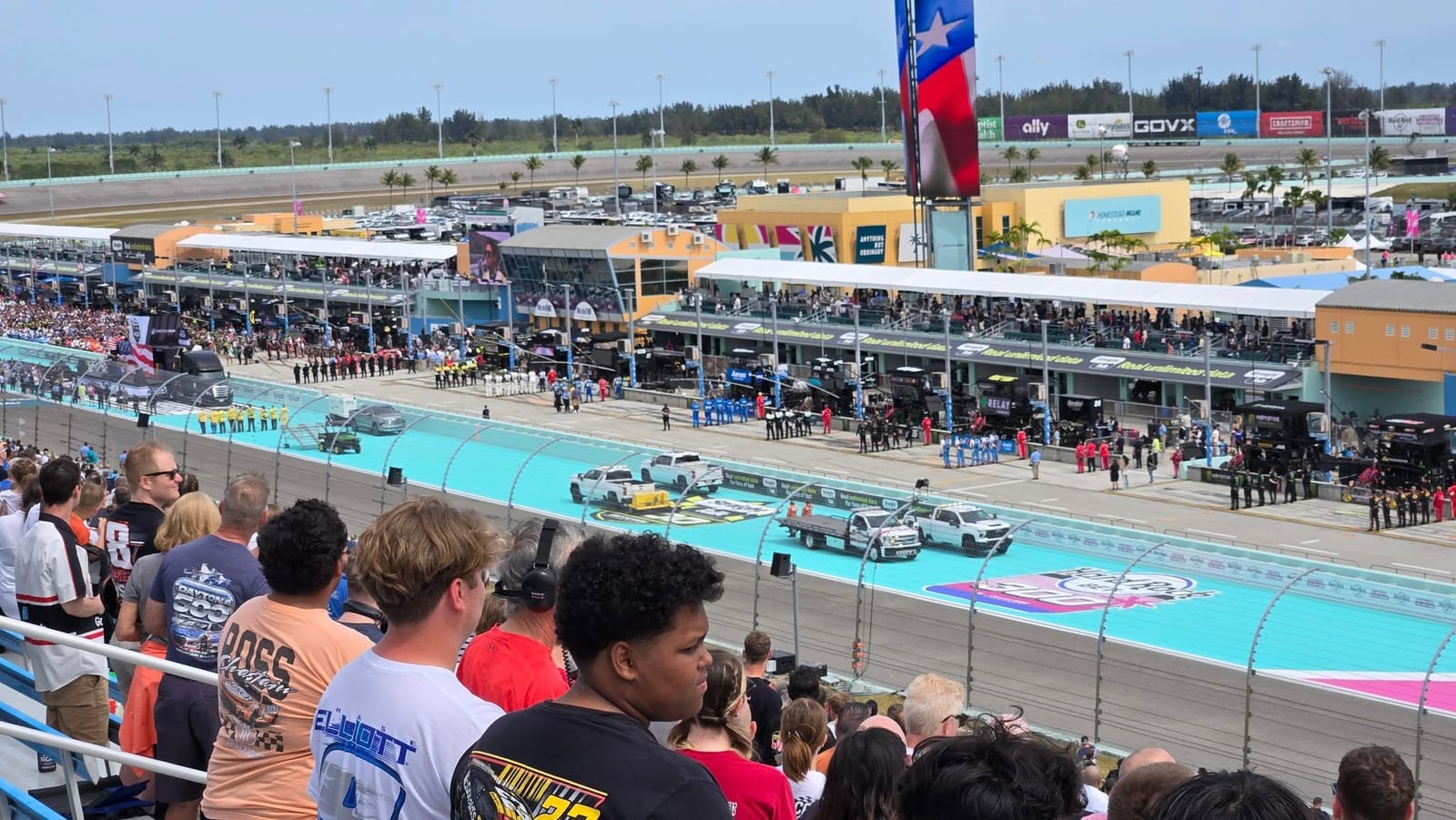
Homestead-Miami Speedway is one of the most demanding and authentic intermediate ovals on the NASCAR circuit. Its true 1.5-mile layout features progressive banking that climbs from 18 to 20 degrees right up against the outside wall, forcing drivers to hustle cars inches off the safer barrier to find grip in the South Florida heat.
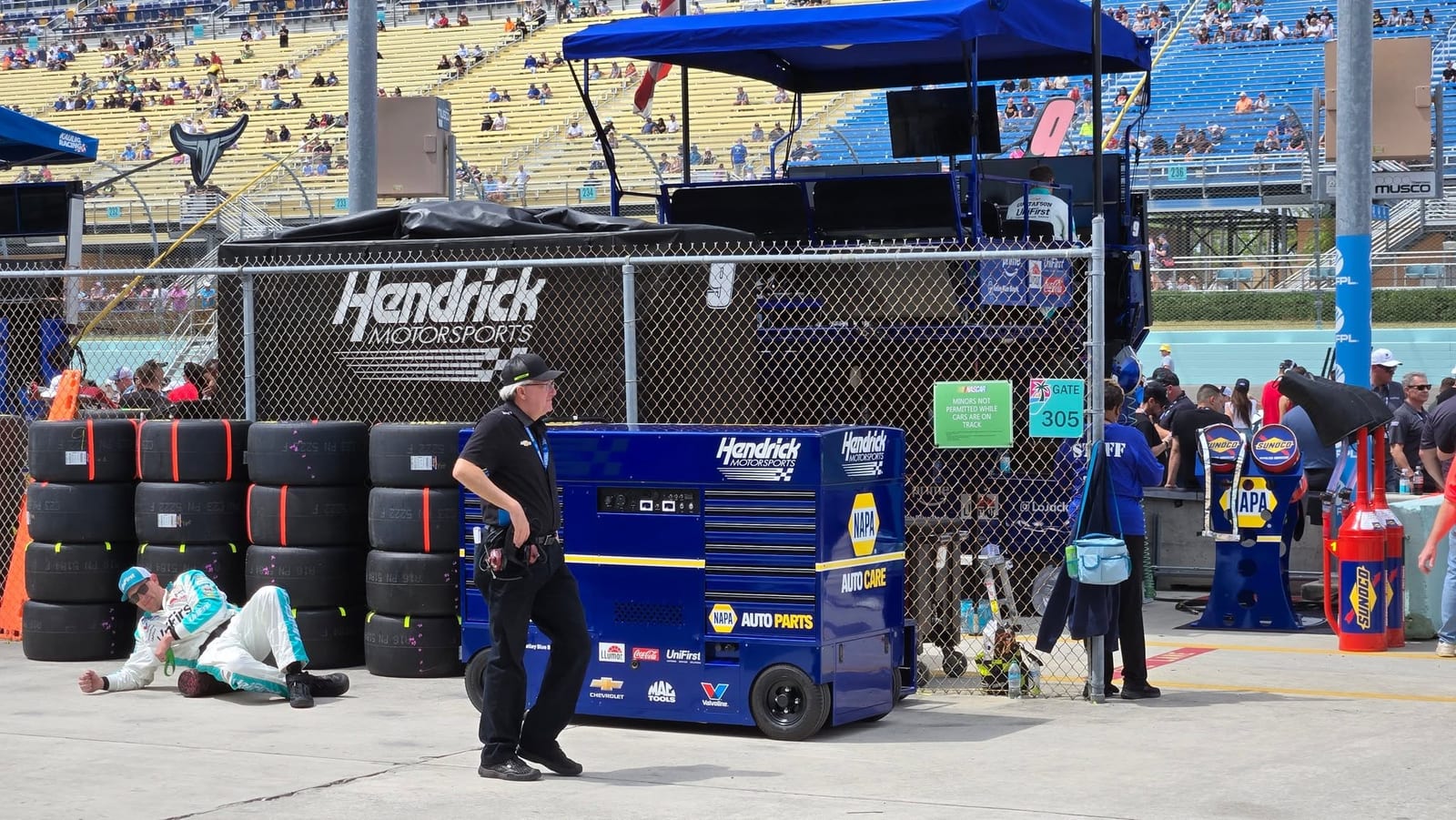
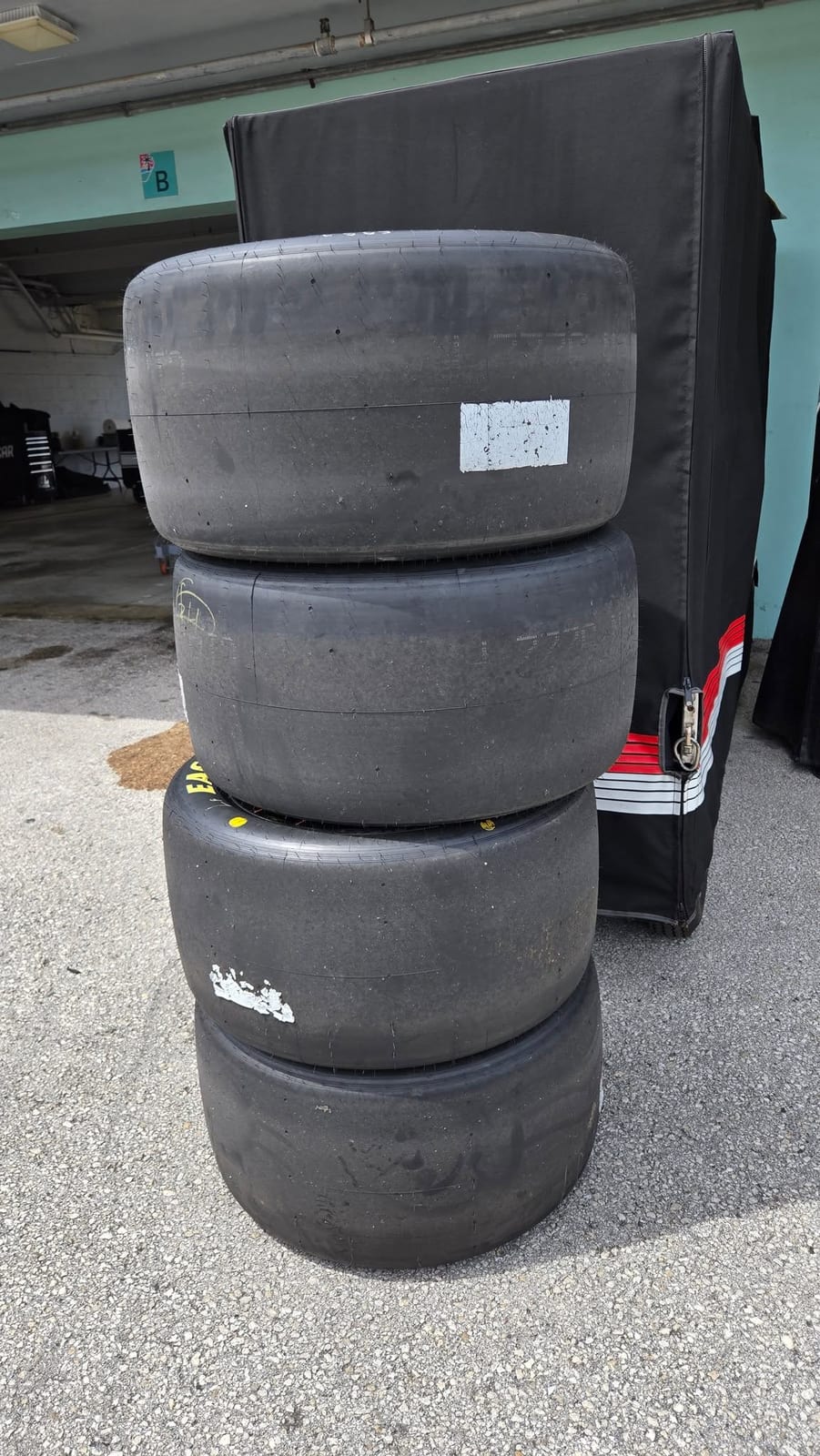
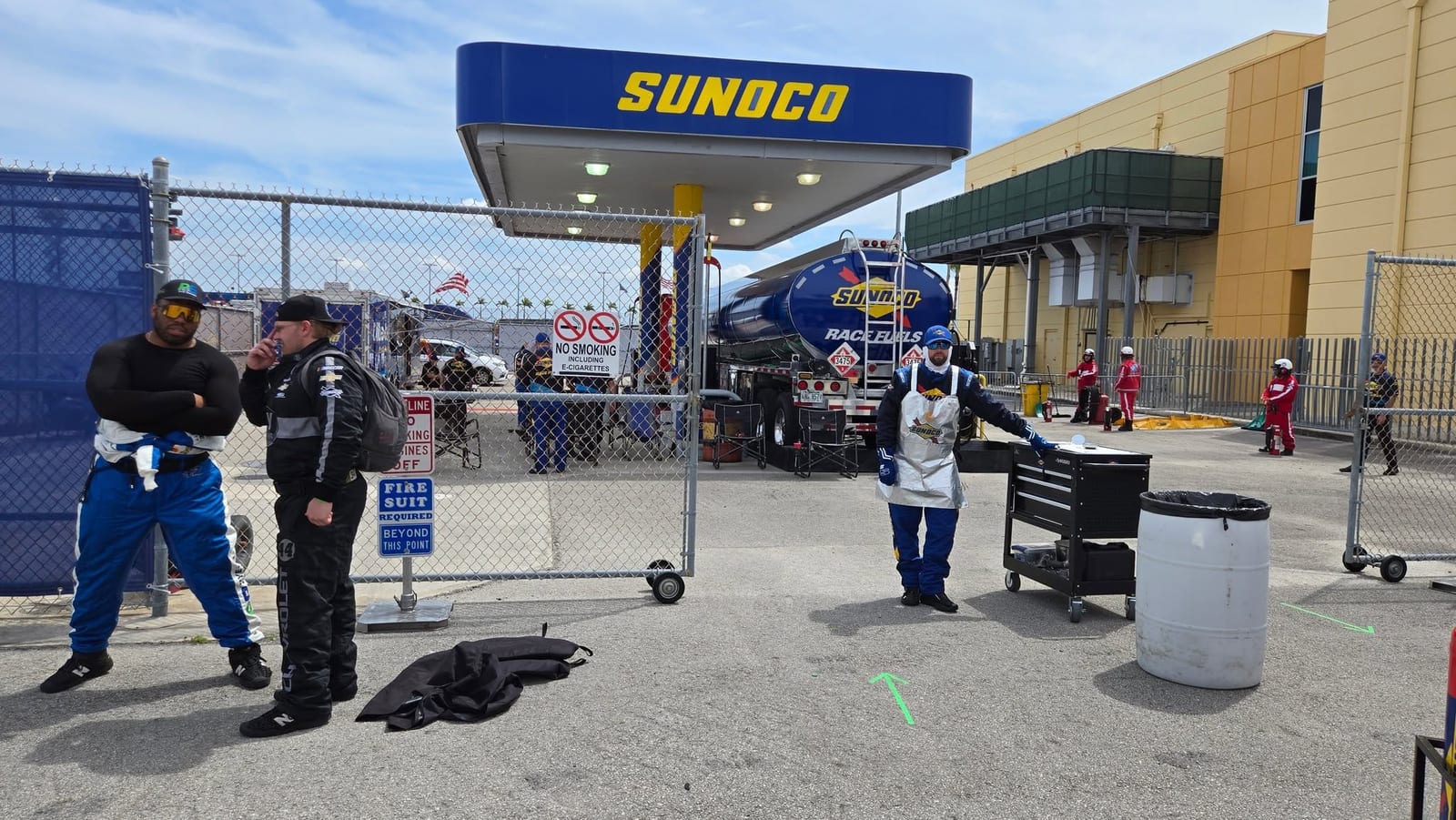
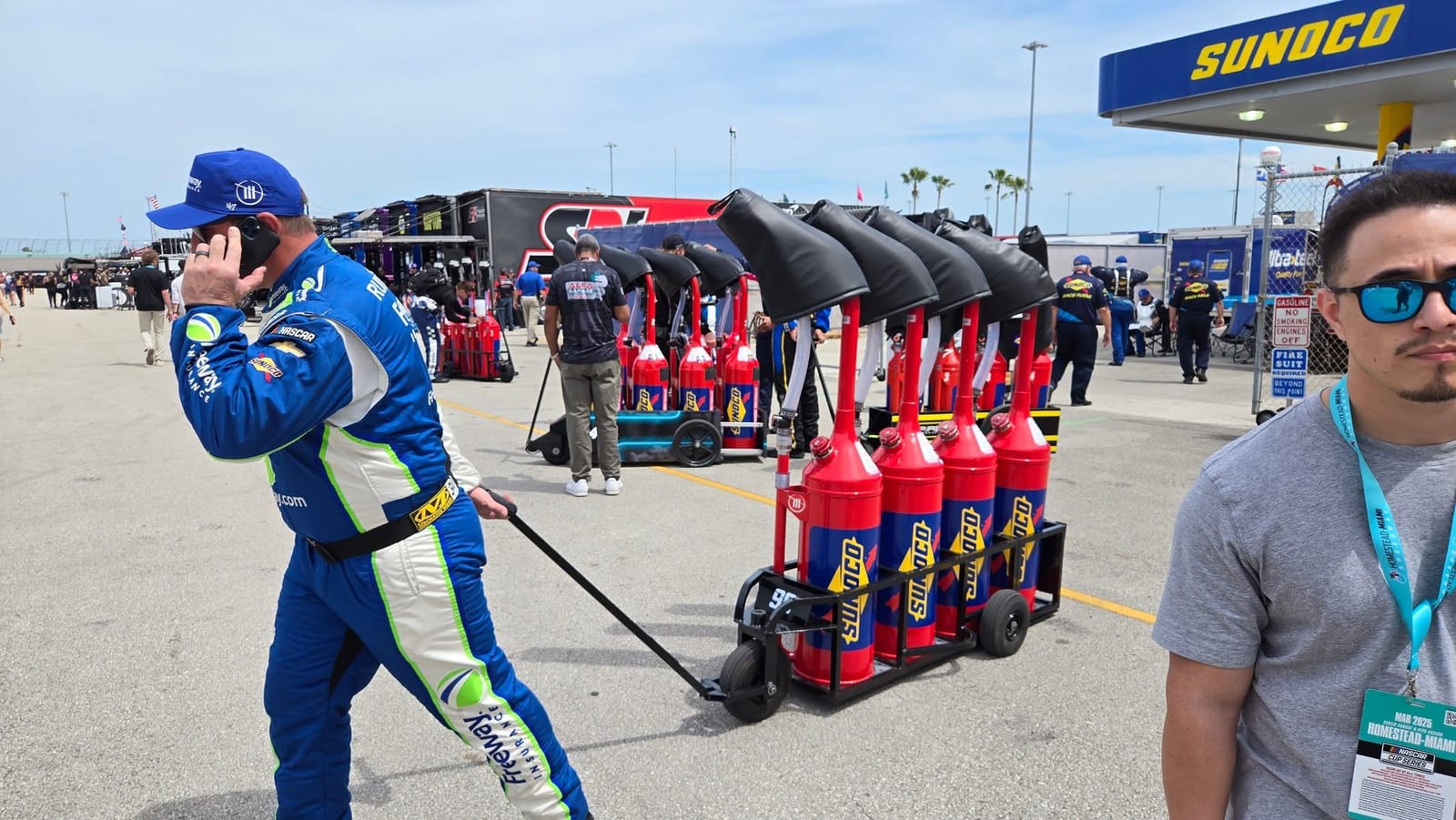
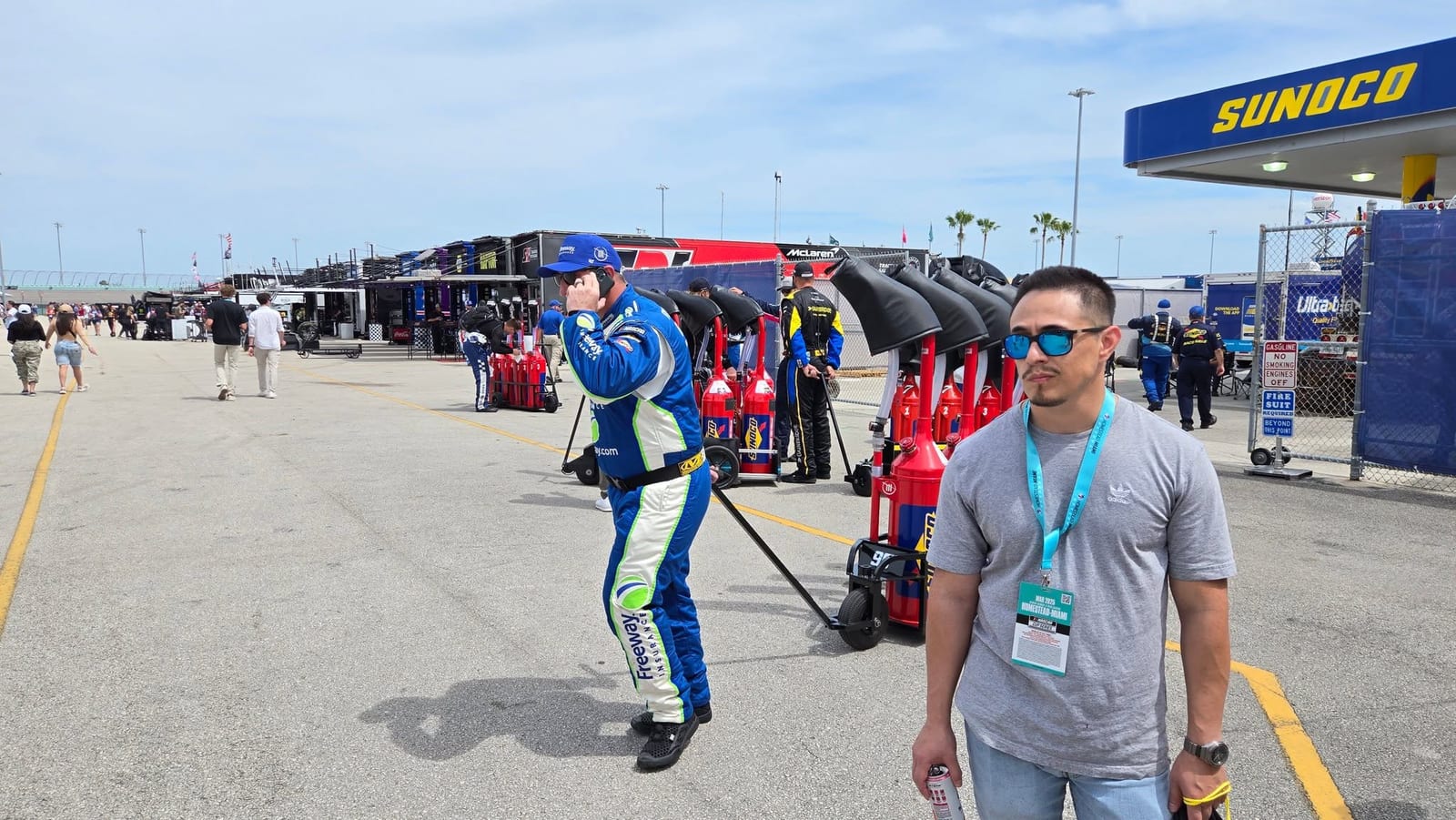
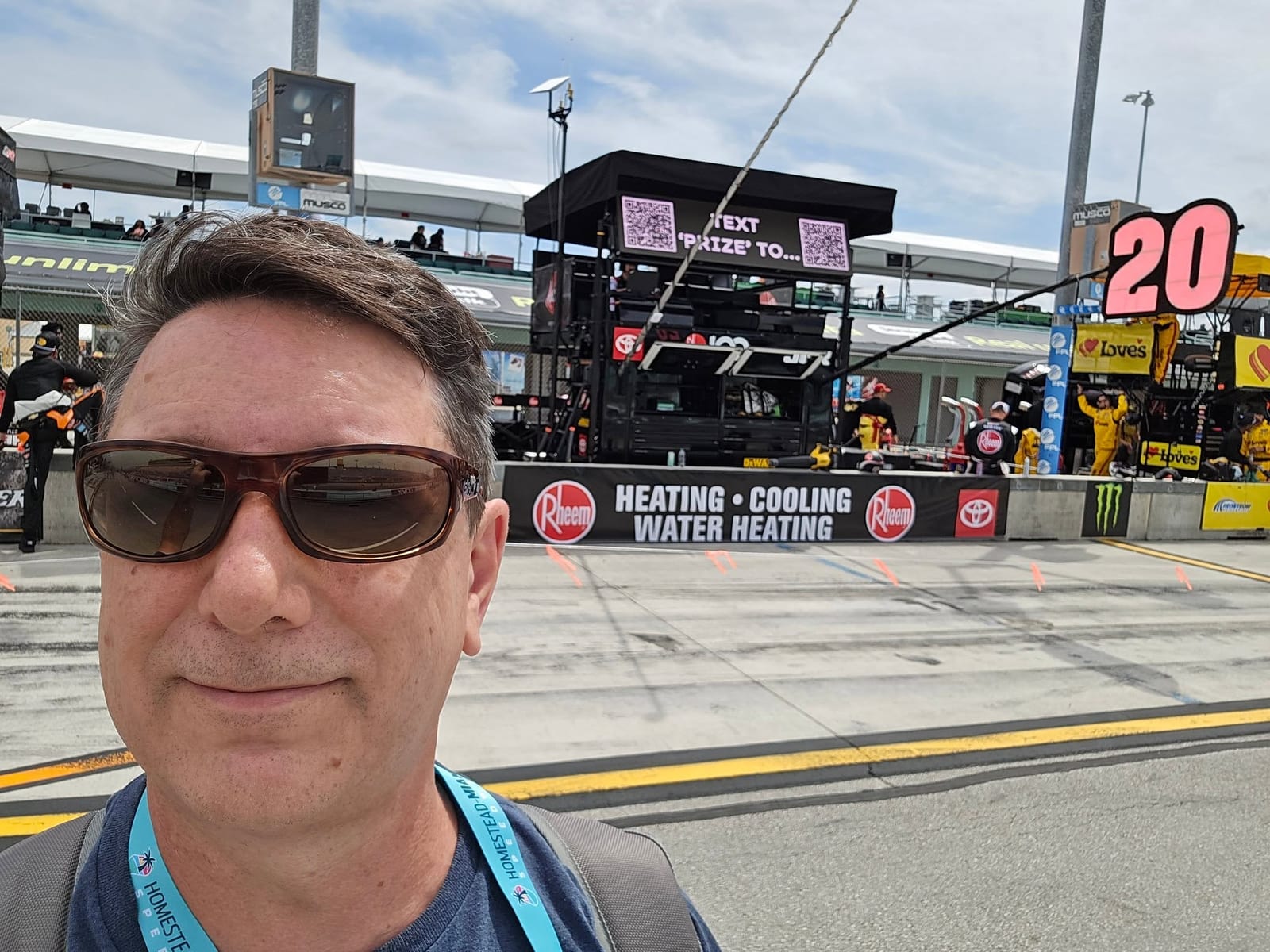
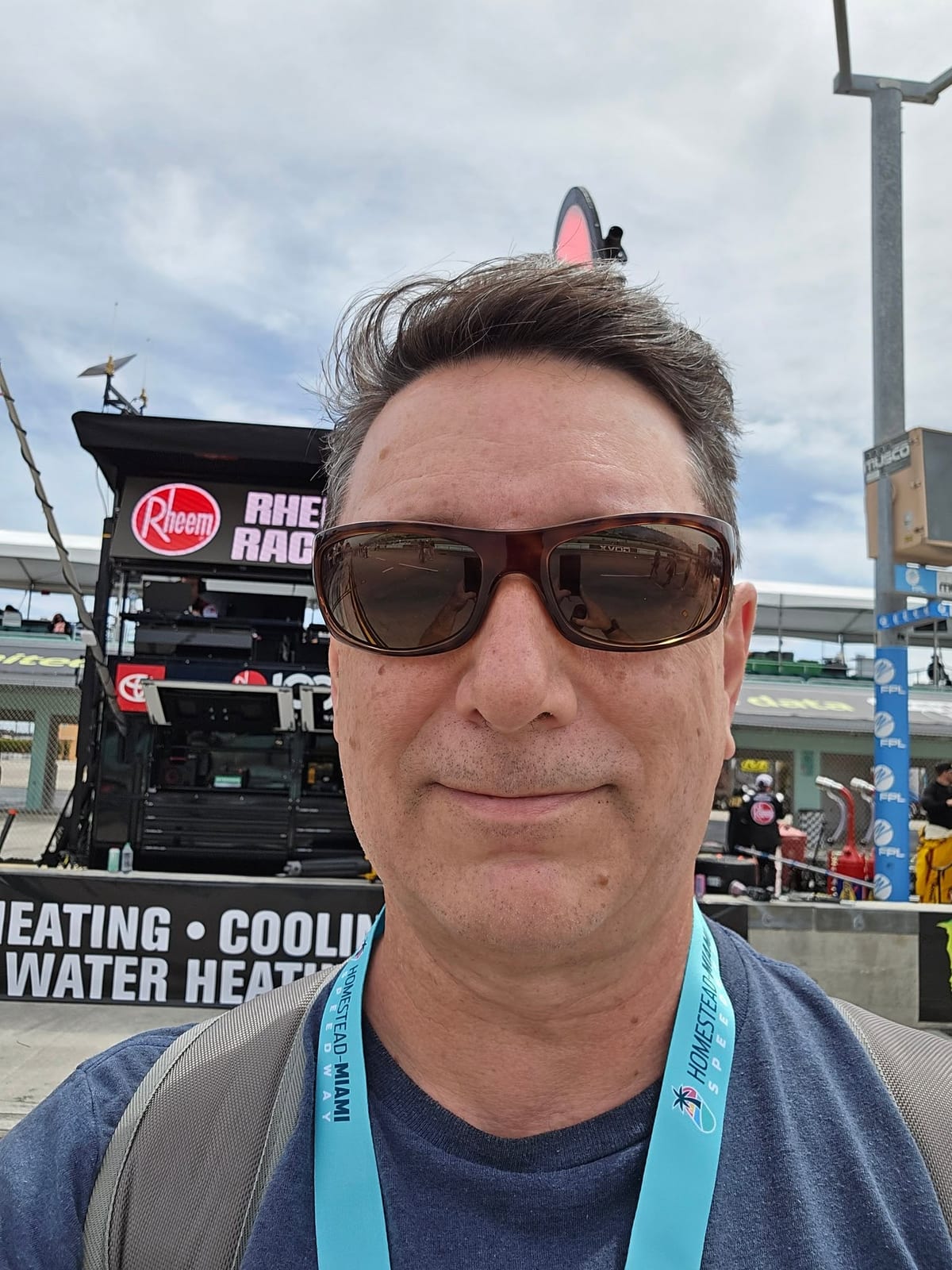
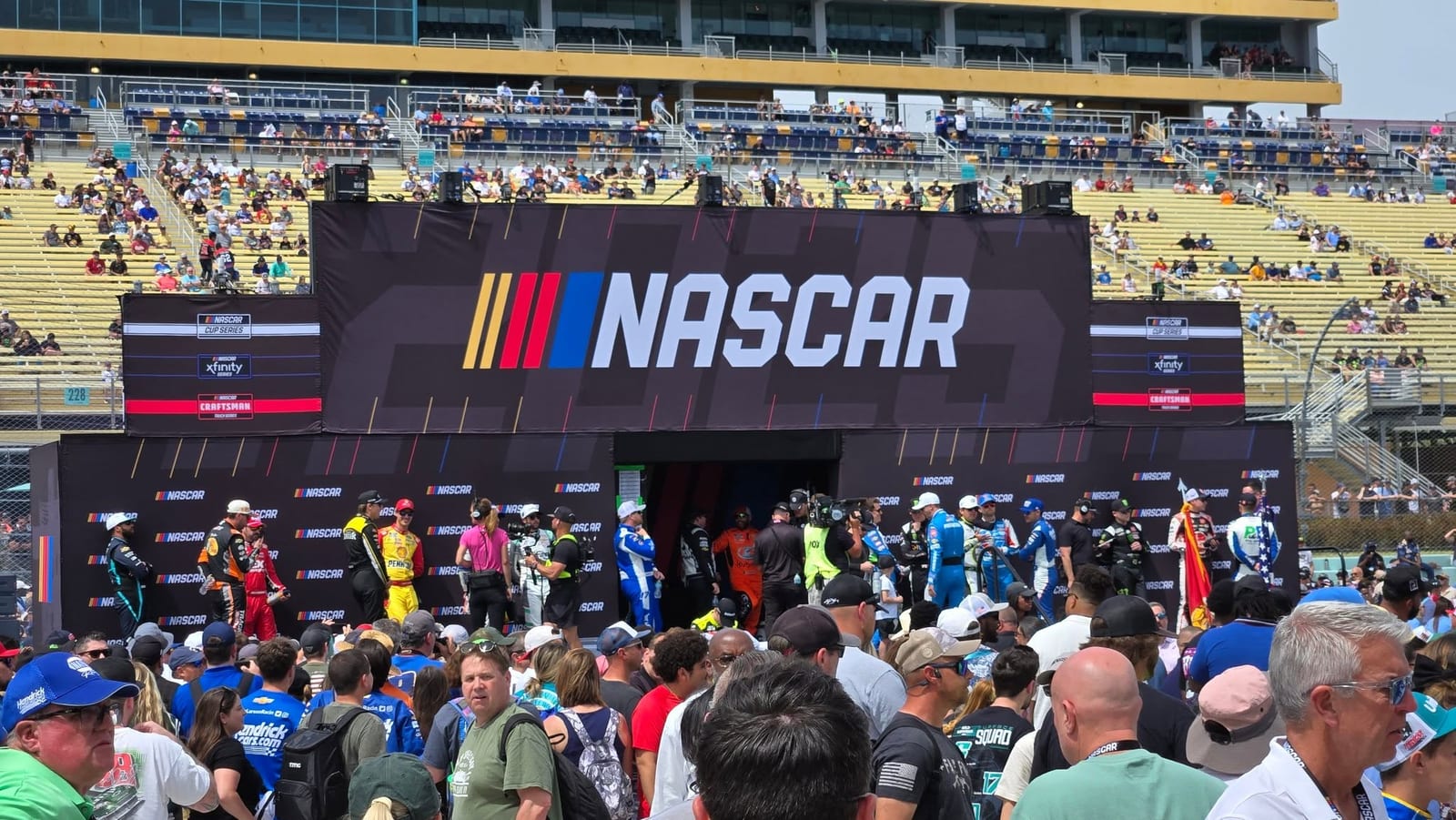
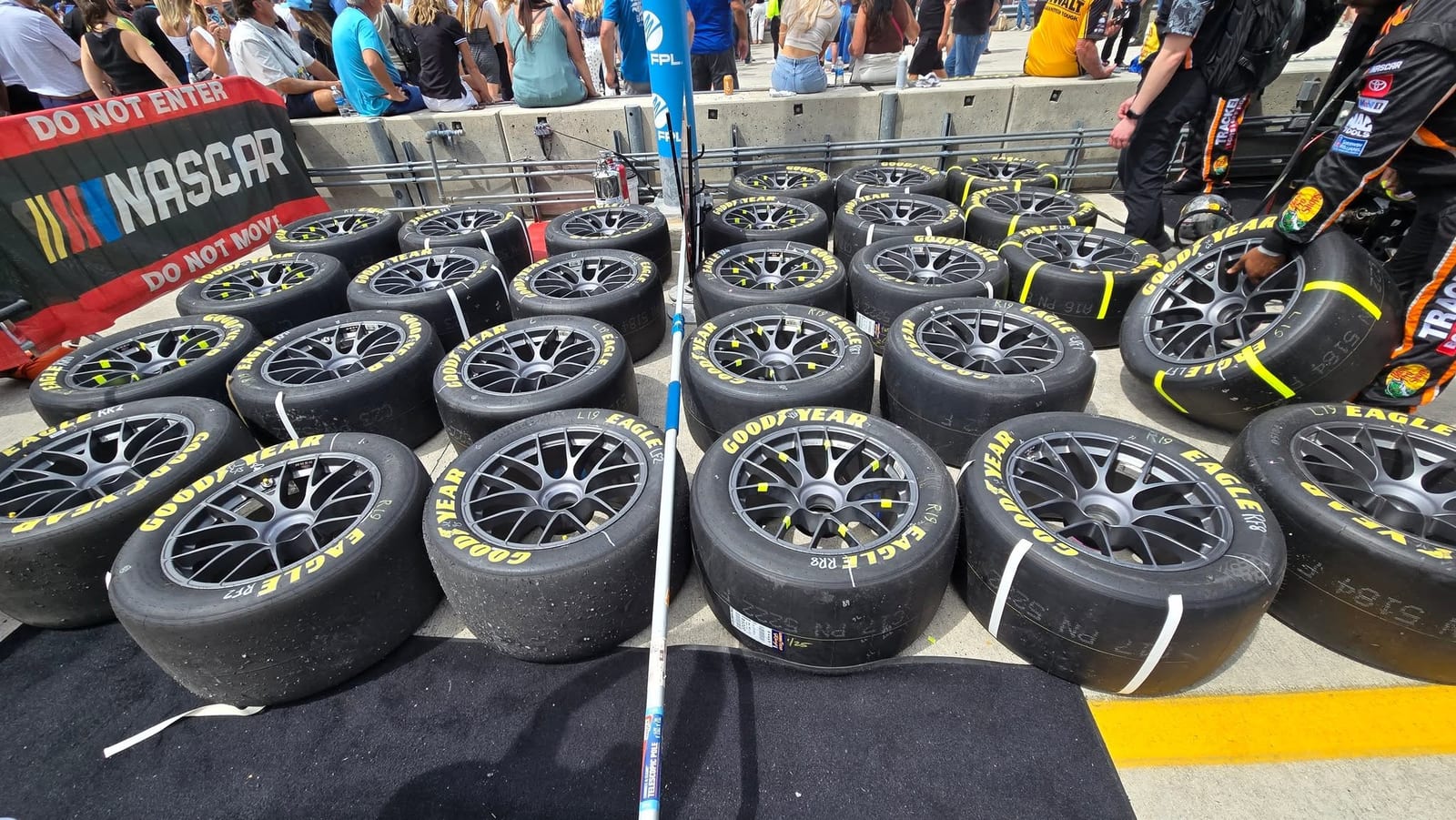
For race weekend, Toyota Gazoo Racing North America provided VIP Series Garage and Pit passes for Maureen and me. That level of credential access puts you inside the heart of the operation: walking active pit boxes, inspecting tire compounds, and standing beside crew chiefs as cars roll through tech inspection.
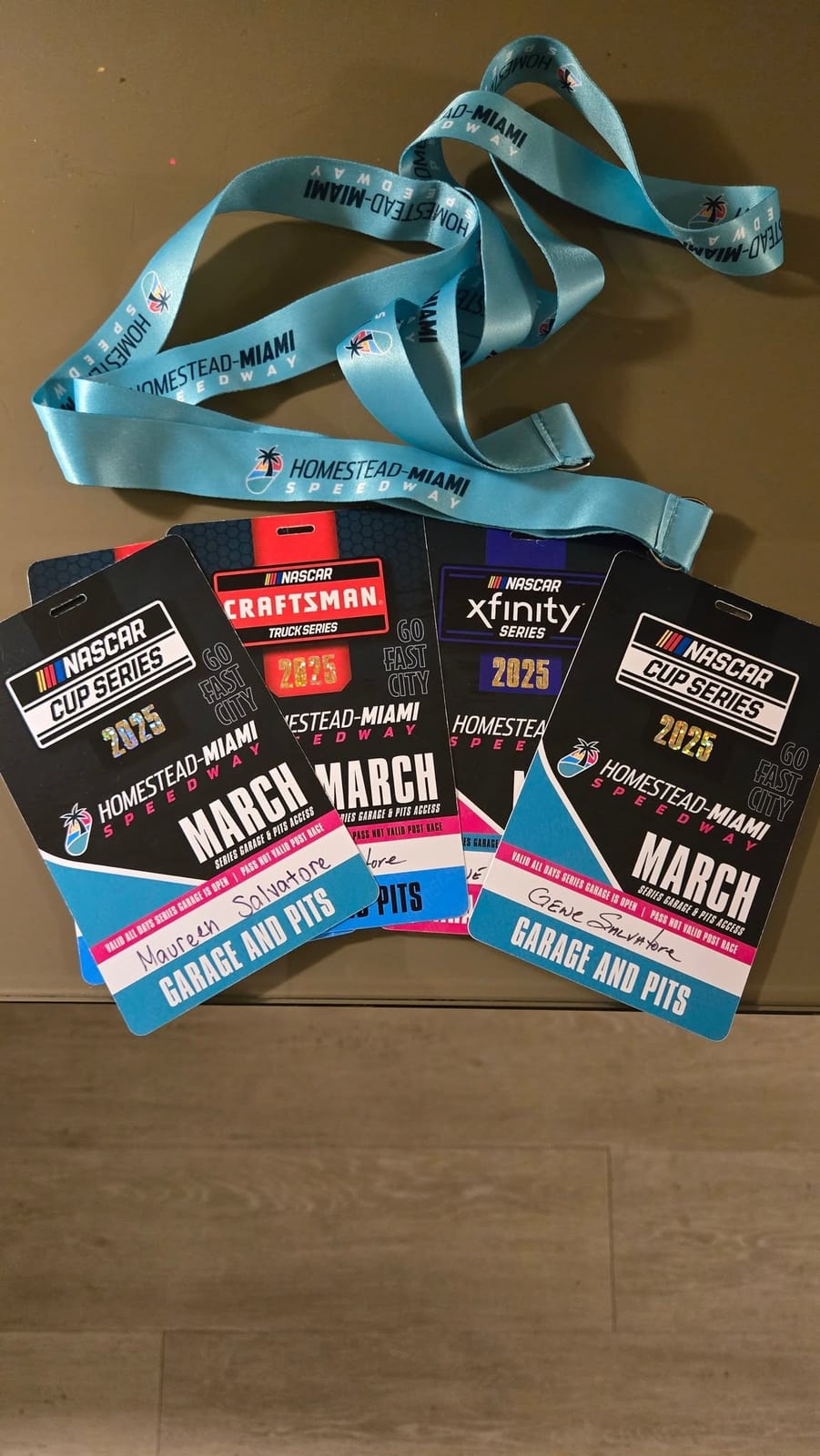
VIP Garage and Pit Road Field Access
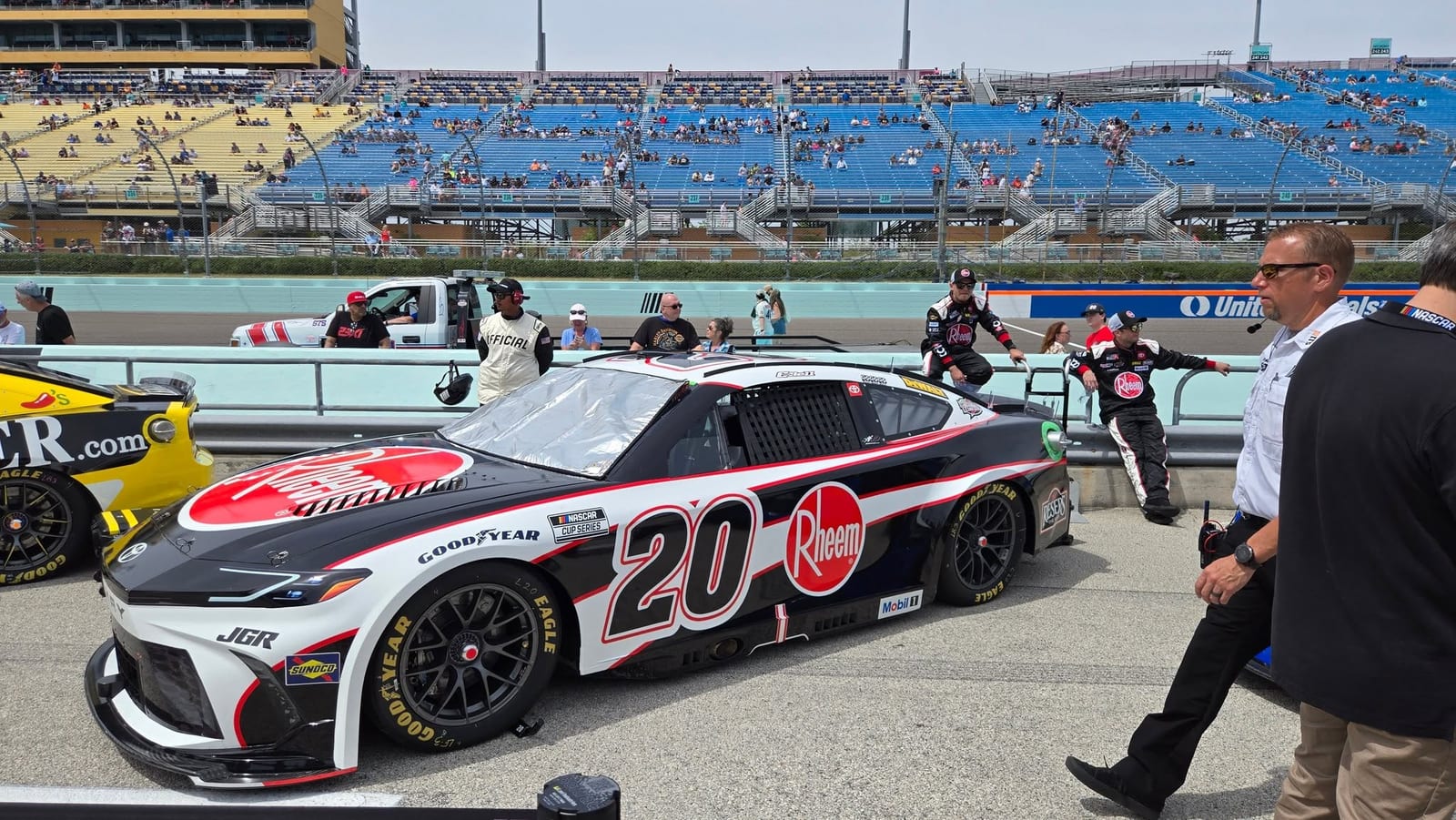
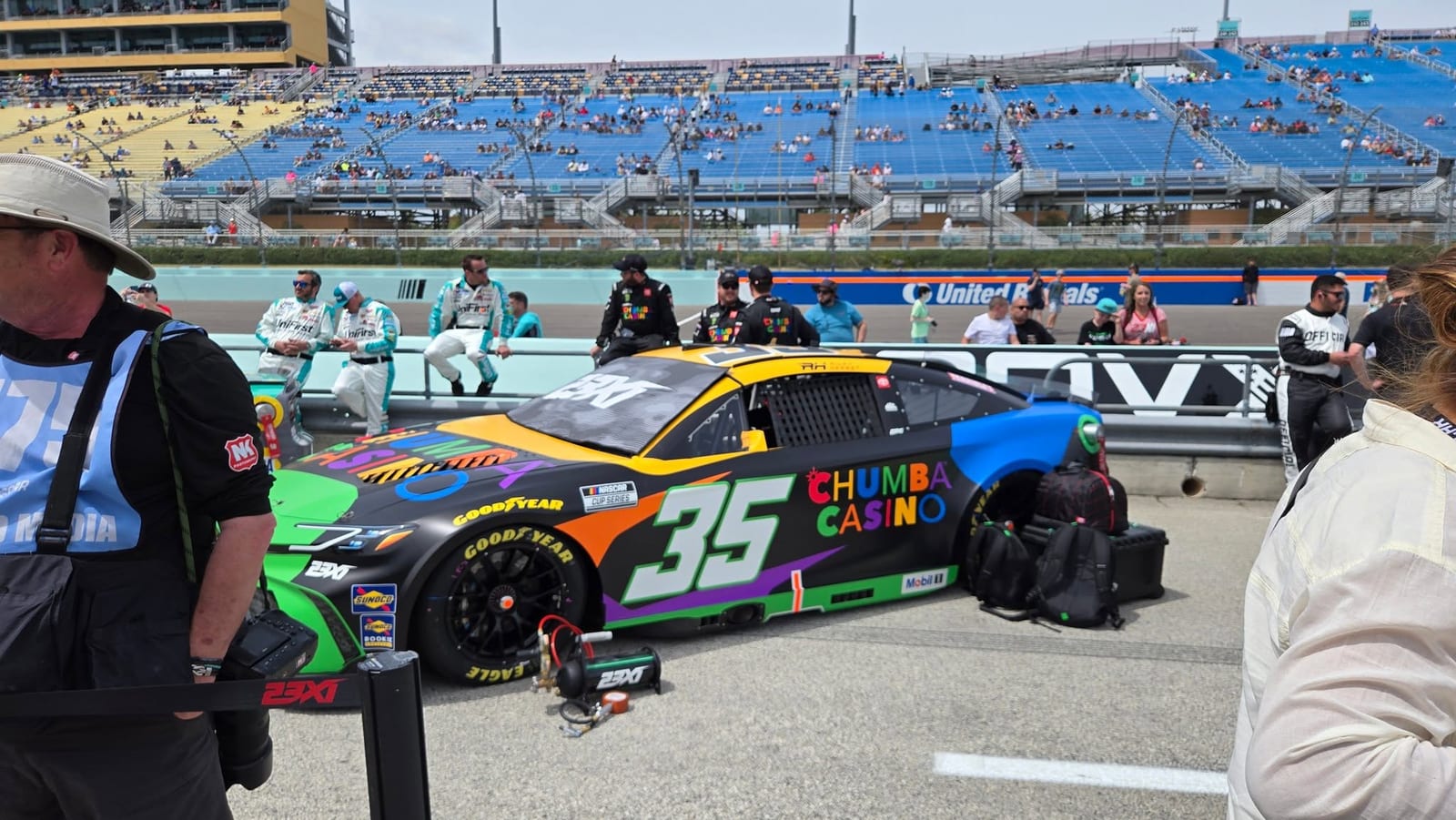
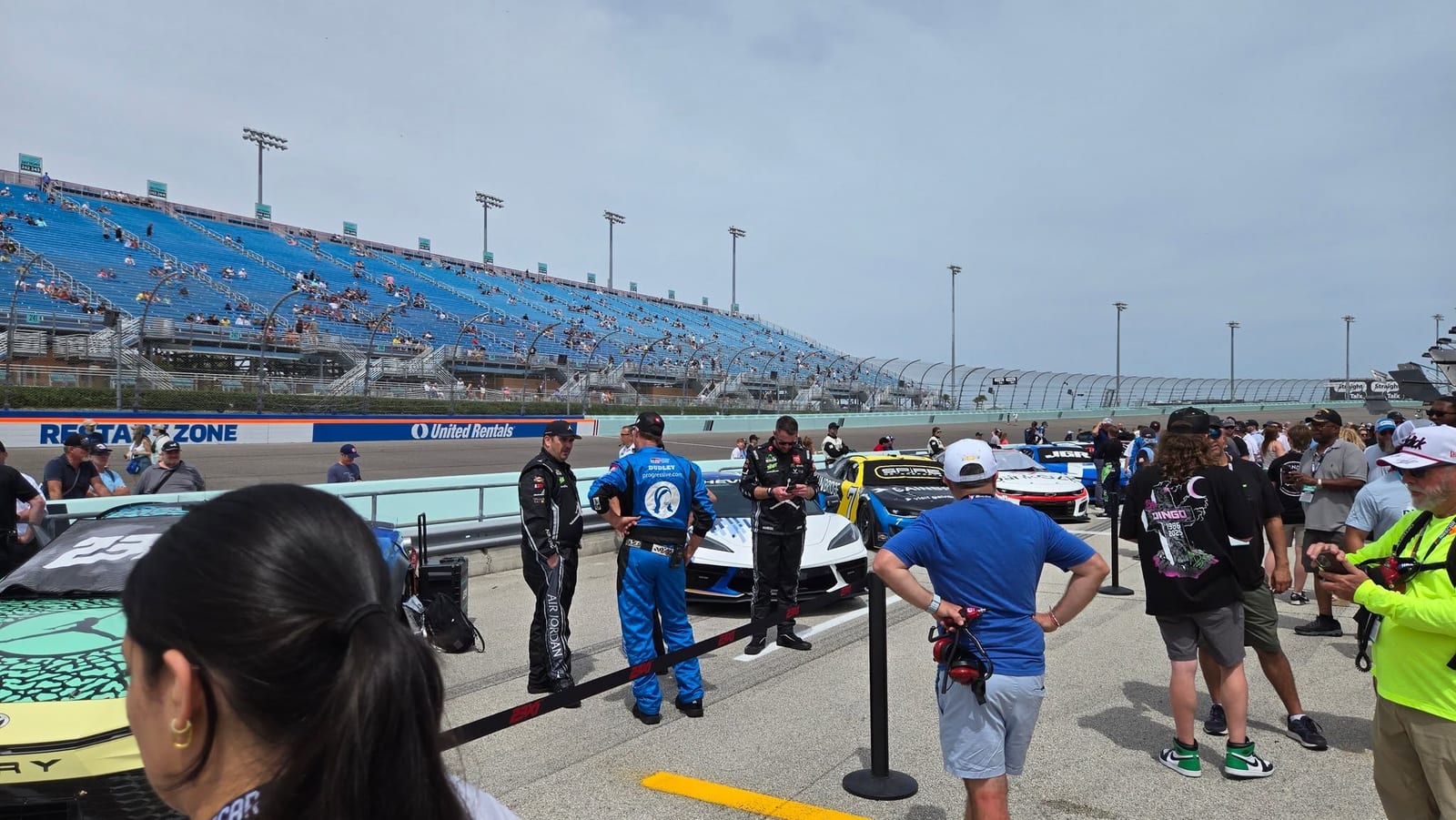
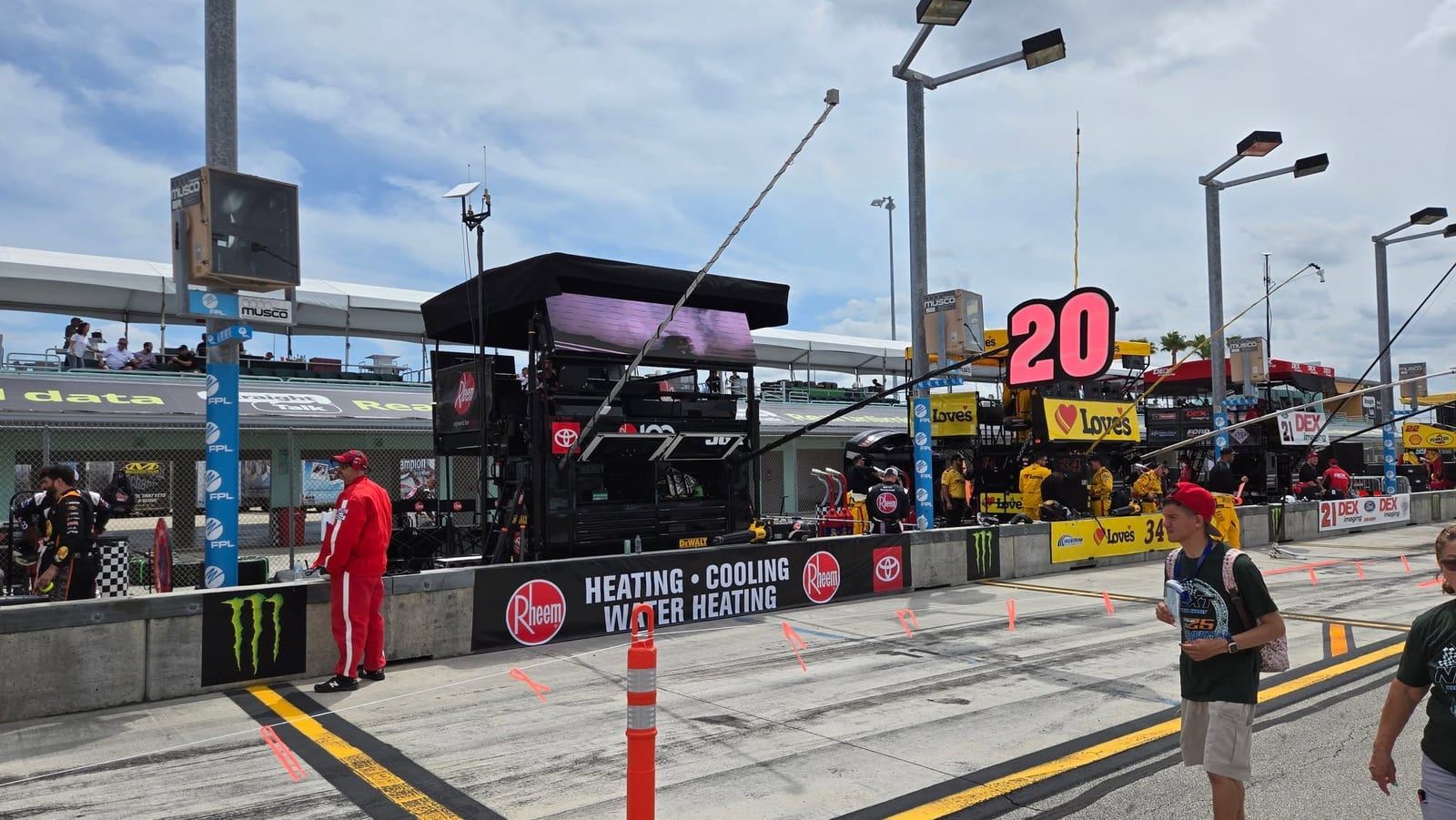
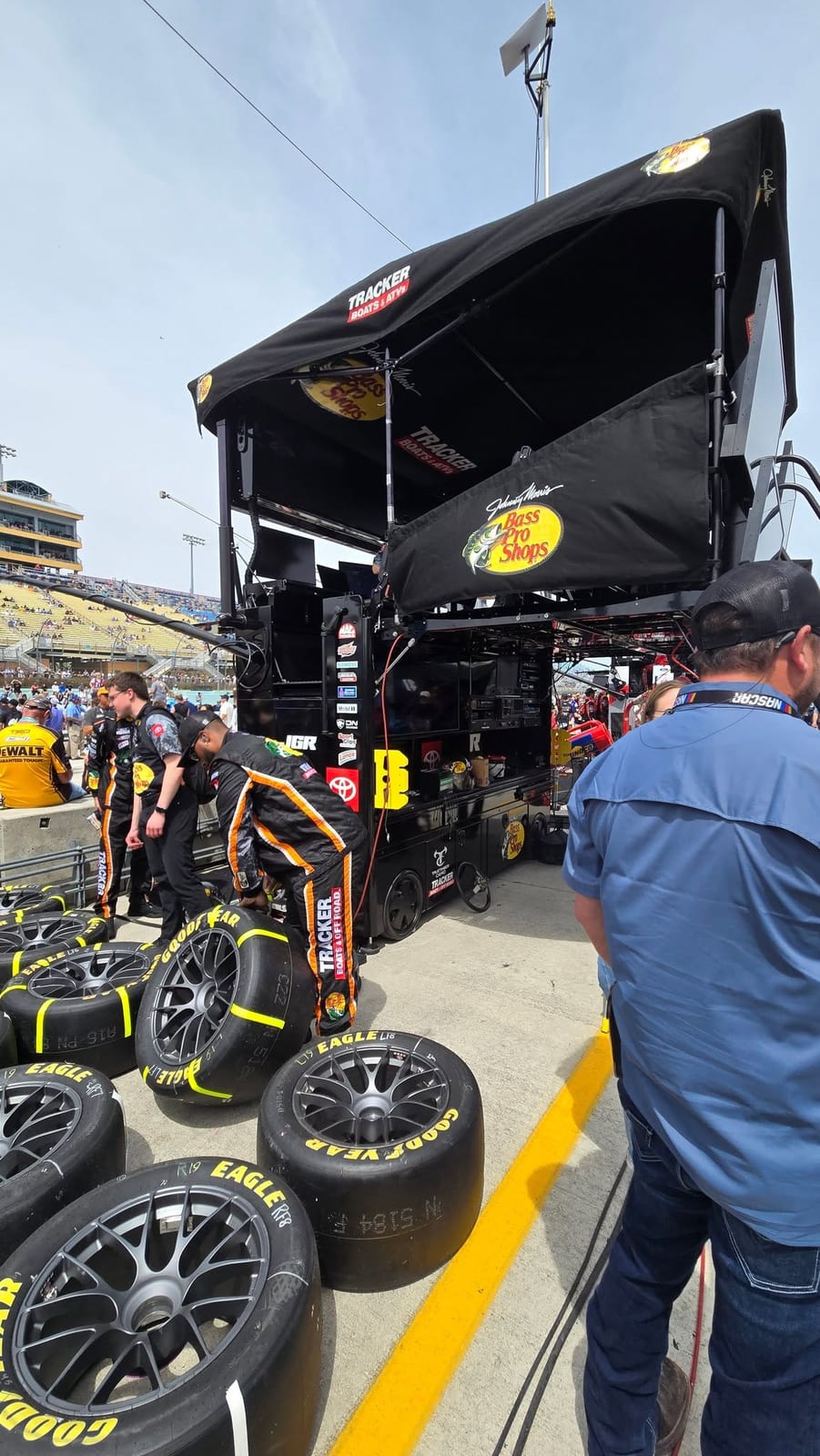
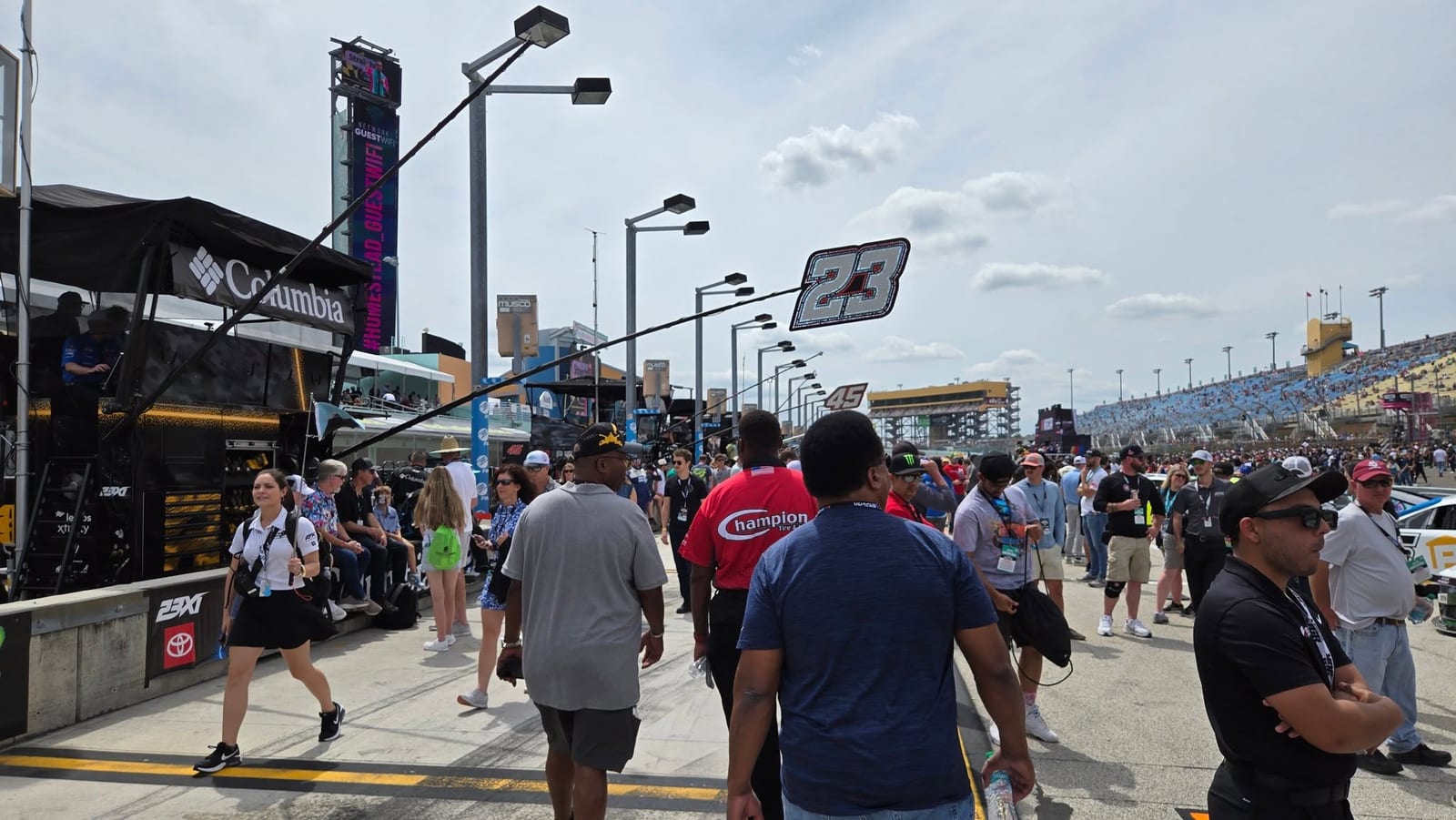
Arriving in the garage before engines fire offers an unfiltered look at Cup Series preparation. With hard passes clipped to our lanyards, we traversed the pit apron as teams staged machinery along the frontstretch wall under the South Florida sun.
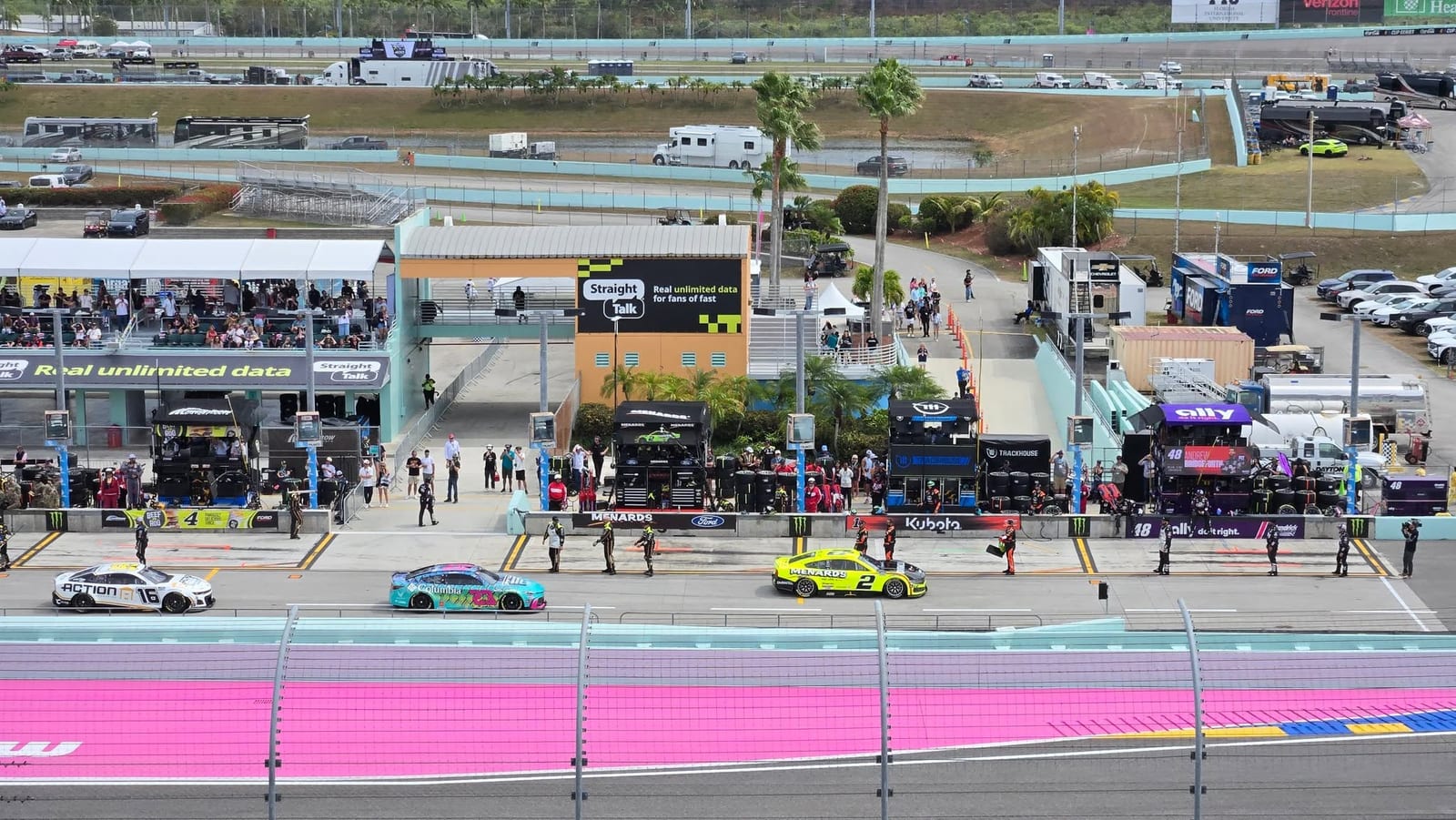
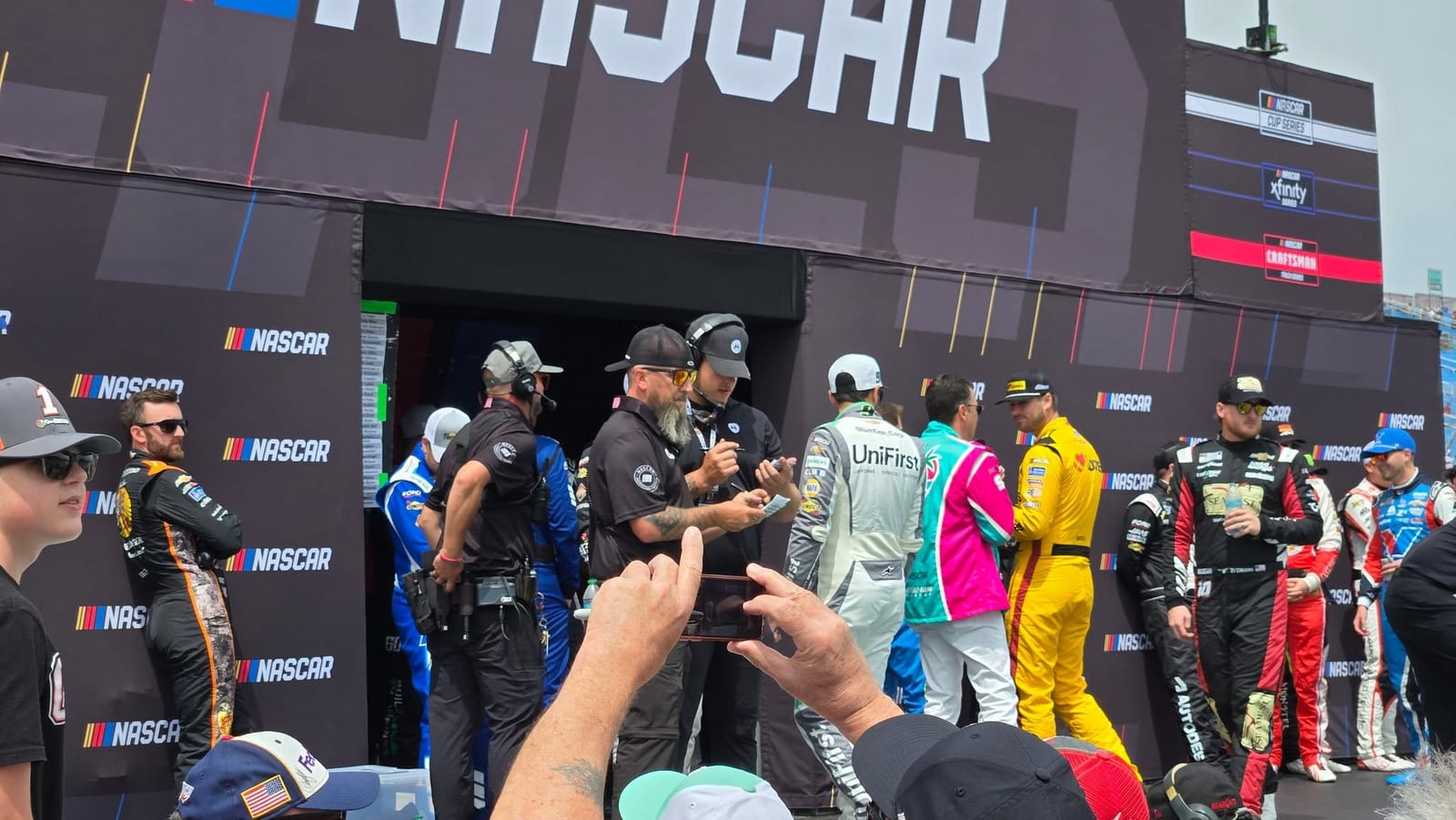
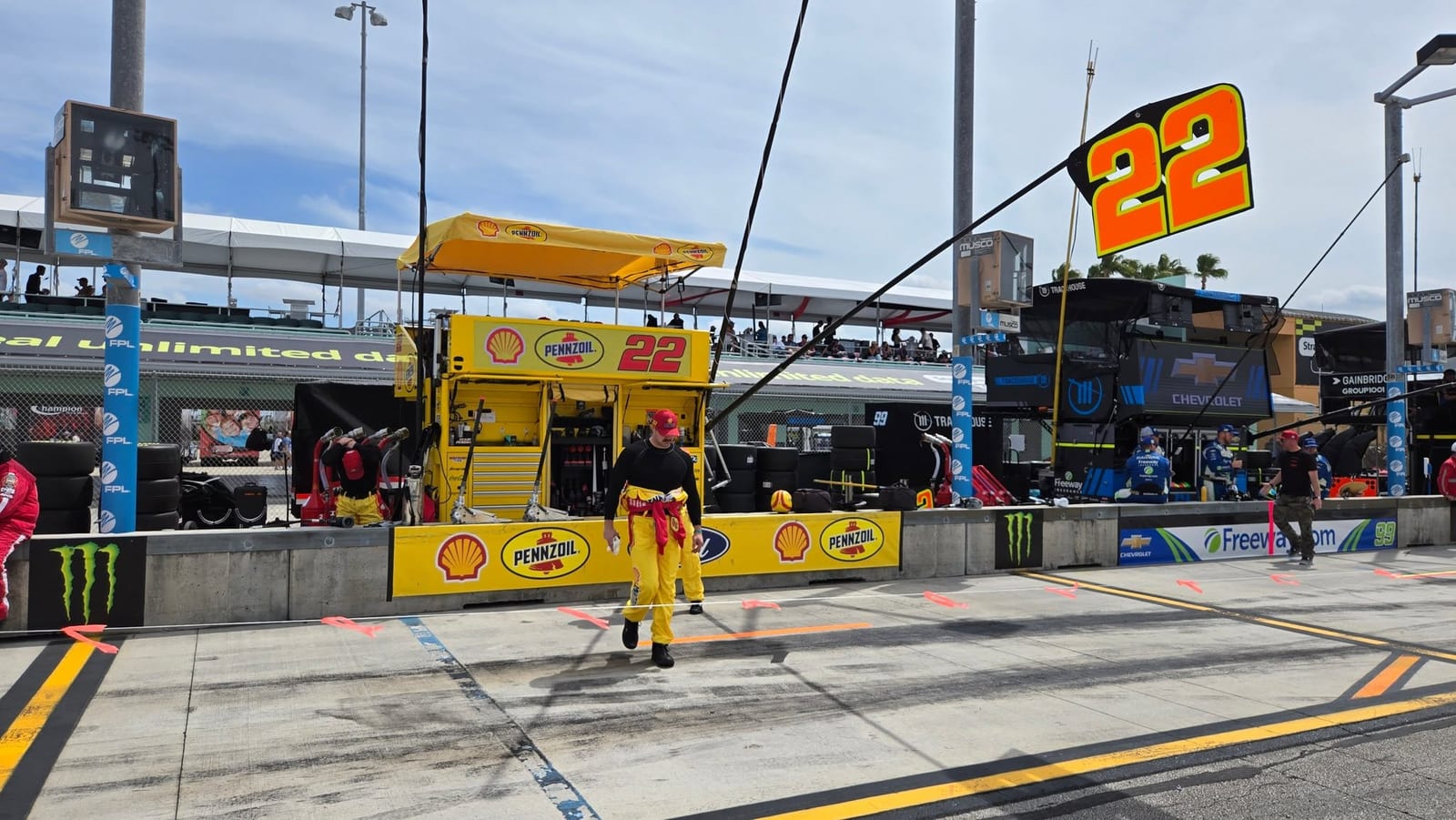
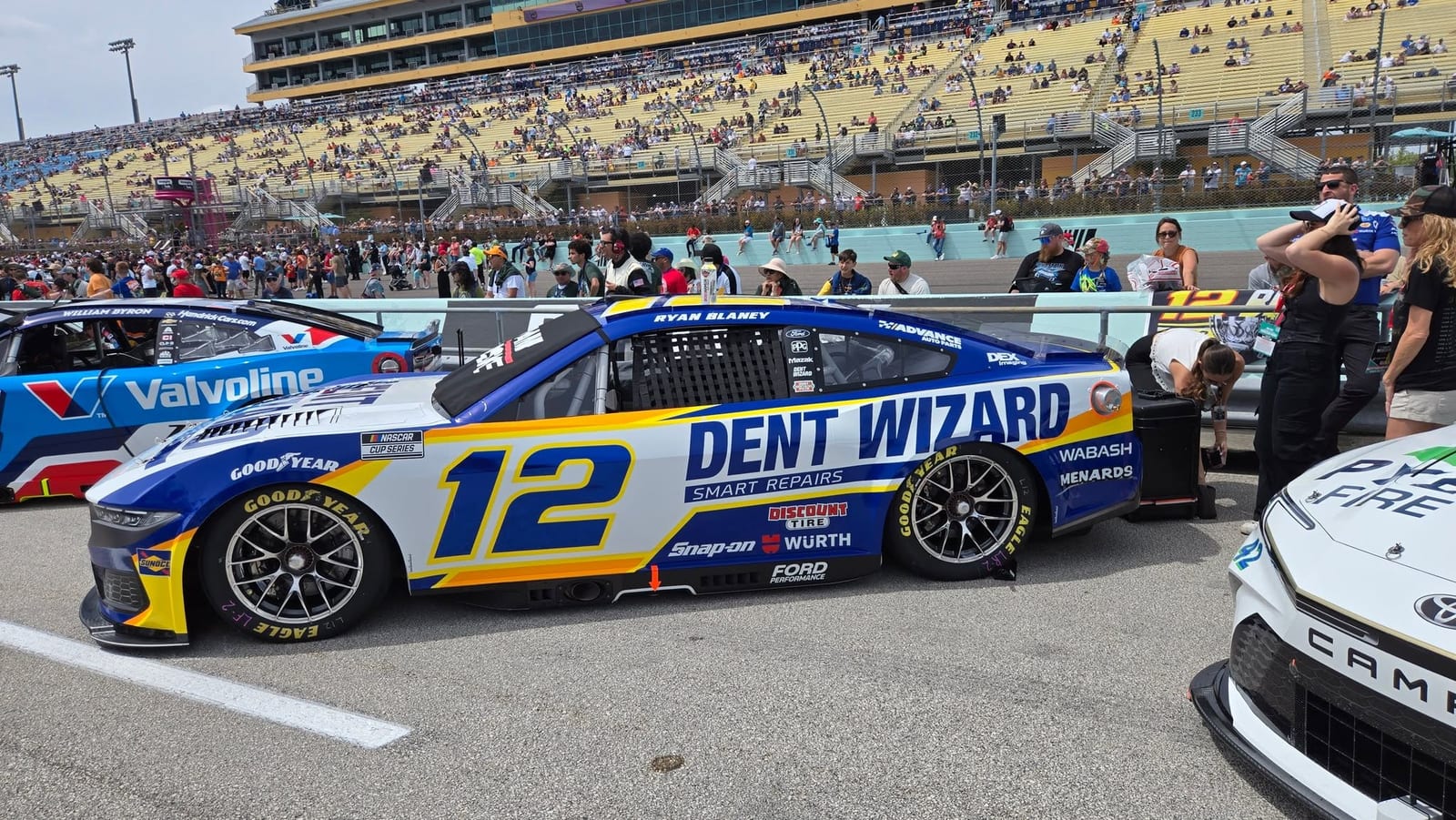
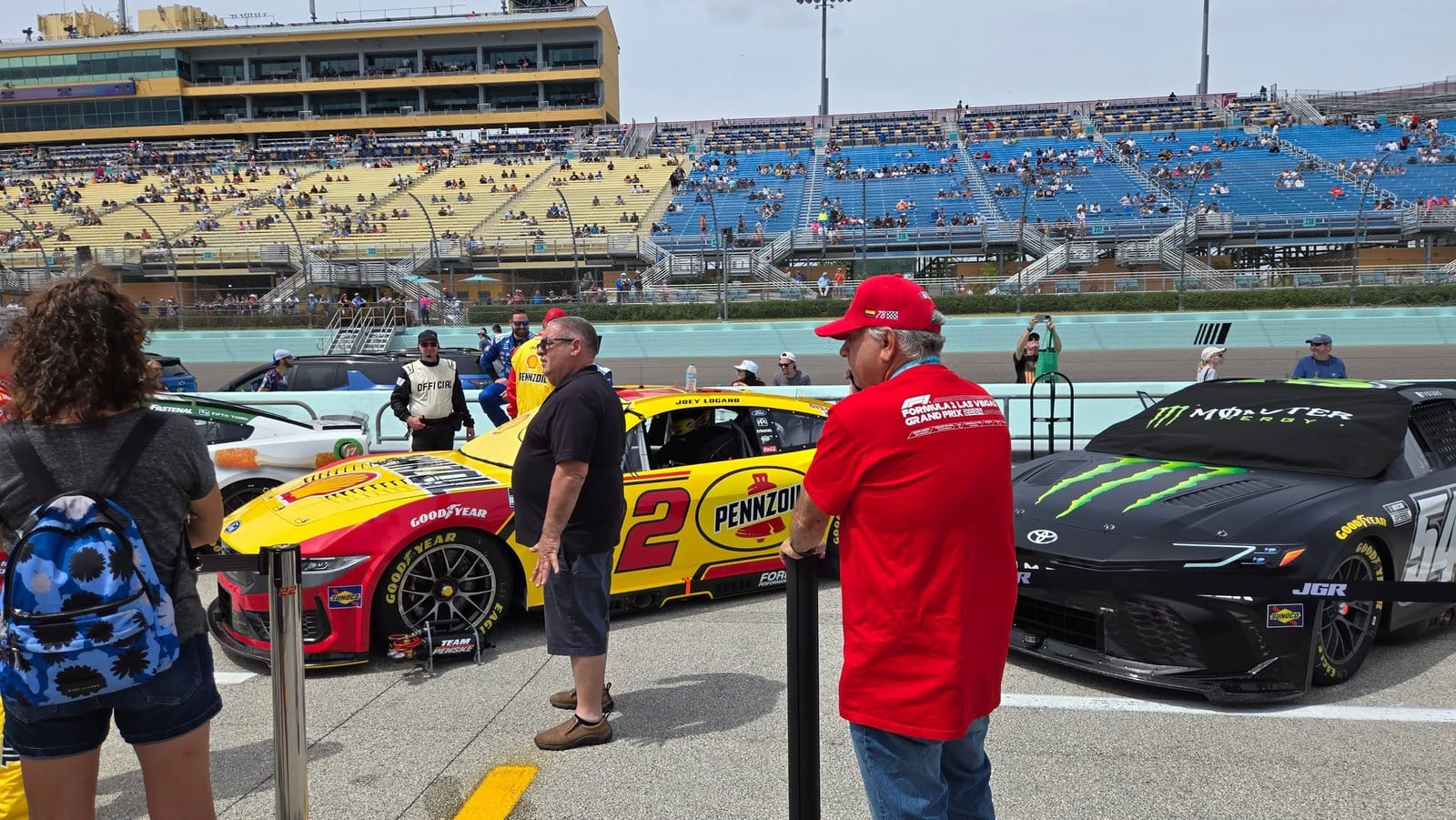
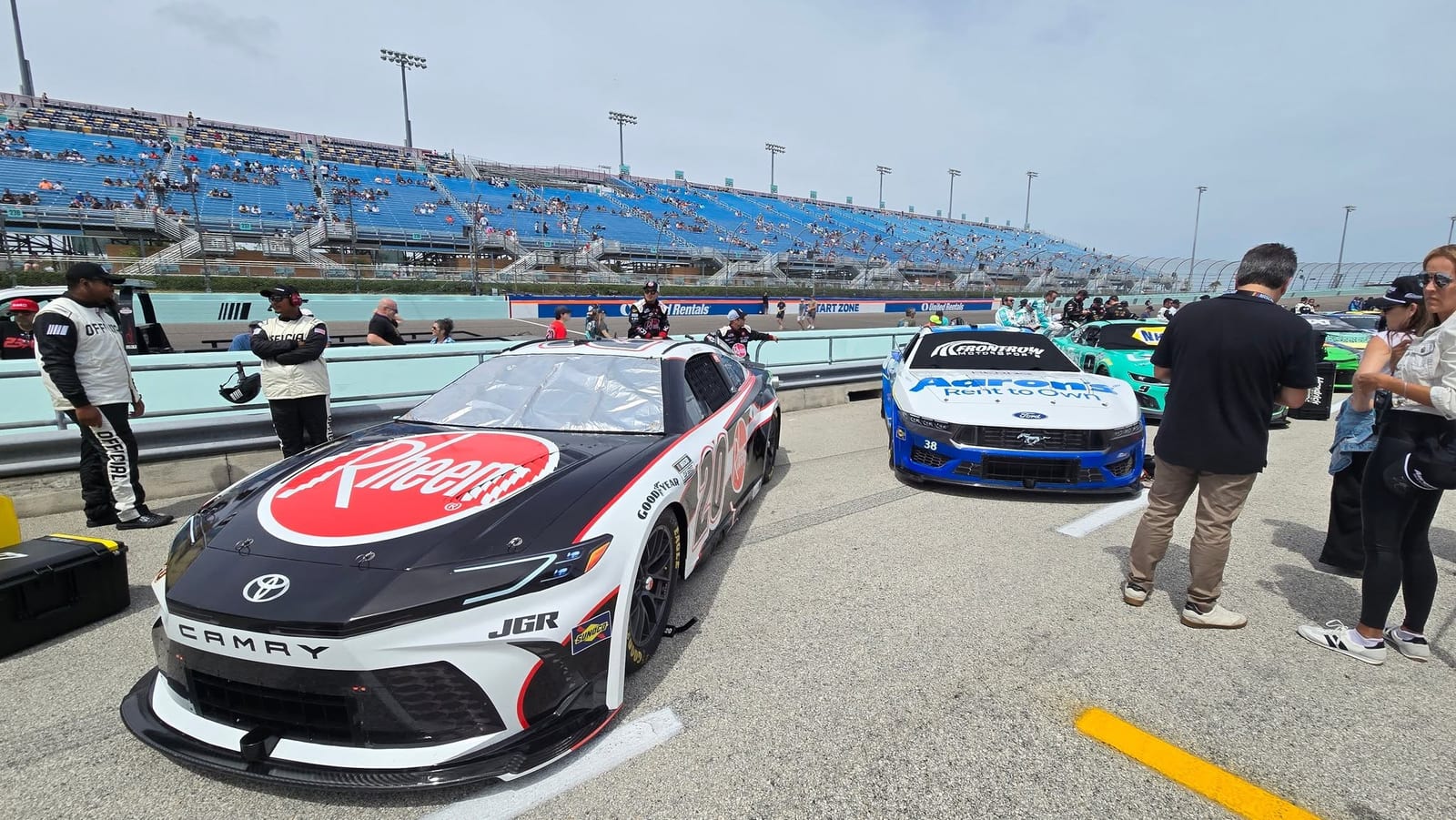
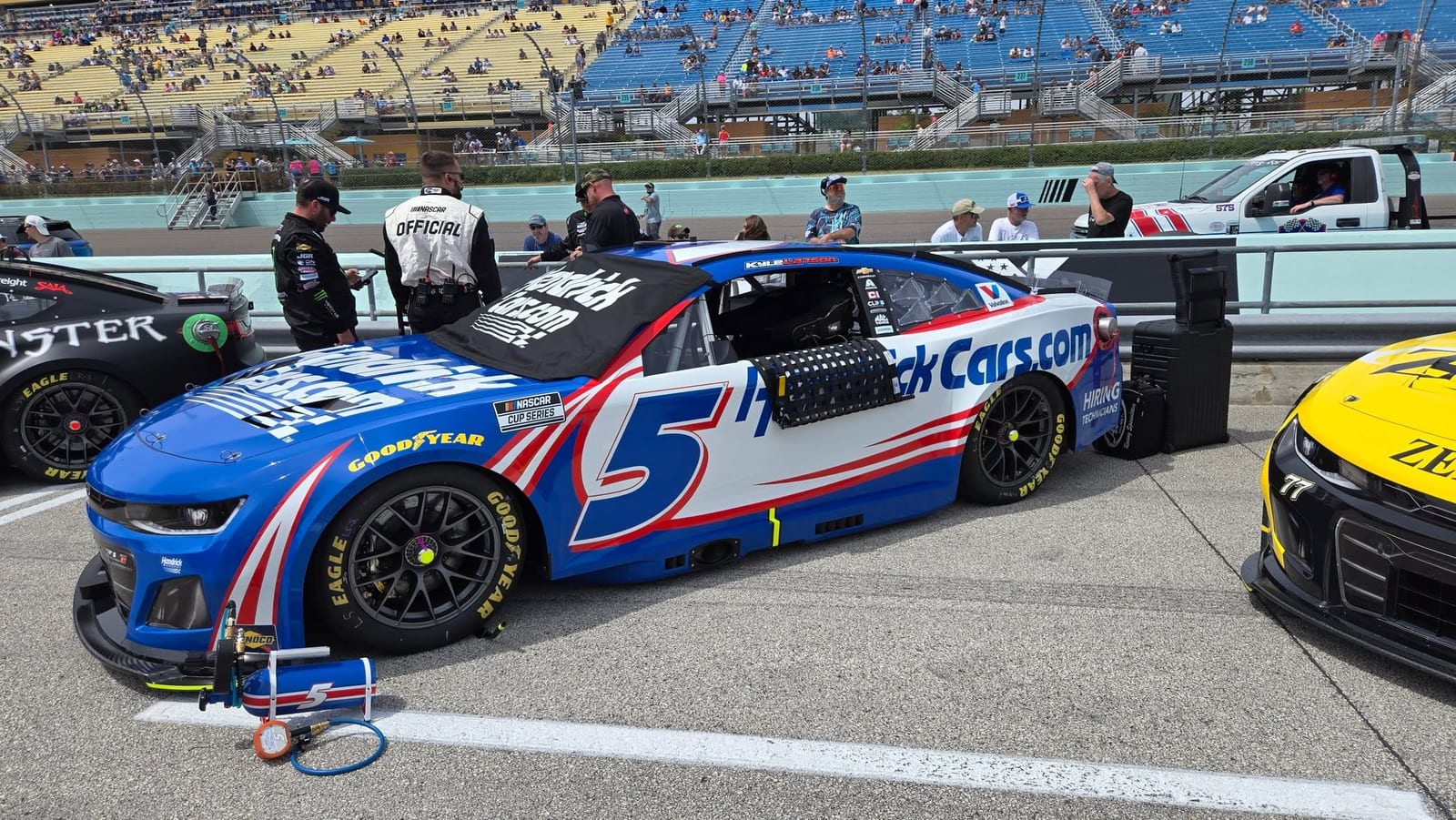
- Pre-Race Staging: Pit road was packed with team haulers and high-end pit boxes. Walking the line gave us an up-close perspective on the front-row contenders:
- Joey Logano’s #22 Shell Pennzoil Ford Mustang parked alongside Ty Gibbs’ #54 Monster Energy Toyota Camry XSE from Joe Gibbs Racing.
- Christopher Bell’s #20 Rheem Toyota Camry XSE sitting near Front Row Motorsports’ #38 Dark Horse Mustang.
- Kyle Larson’s #5 HendrickCars.com Chevrolet Camaro ZL1 with its specialized nitrogen air regulators standing by for tire pressures.
- 23XI Racing Operations: We spent time observing 23XI Racing’s pit compound for Bubba Wallace’s #23 Columbia Sportswear machine and Tyler Reddick’s #45 team. Their overhead gantry setups, timing towers, and track telemetry displays represent the cutting edge of modern Cup operations.
Grandstand Telemetry Setup: Verizon Track Wi-Fi and Radio Scanner Split
When the green flag drops at a NASCAR race, following the complete picture from the grandstands requires serious hardware. Modern stock car racing involves constant spotter communication, pit stop timing, and broadcast analysis that stadium loudspeakers cannot deliver over 700-horsepower open exhaust notes.
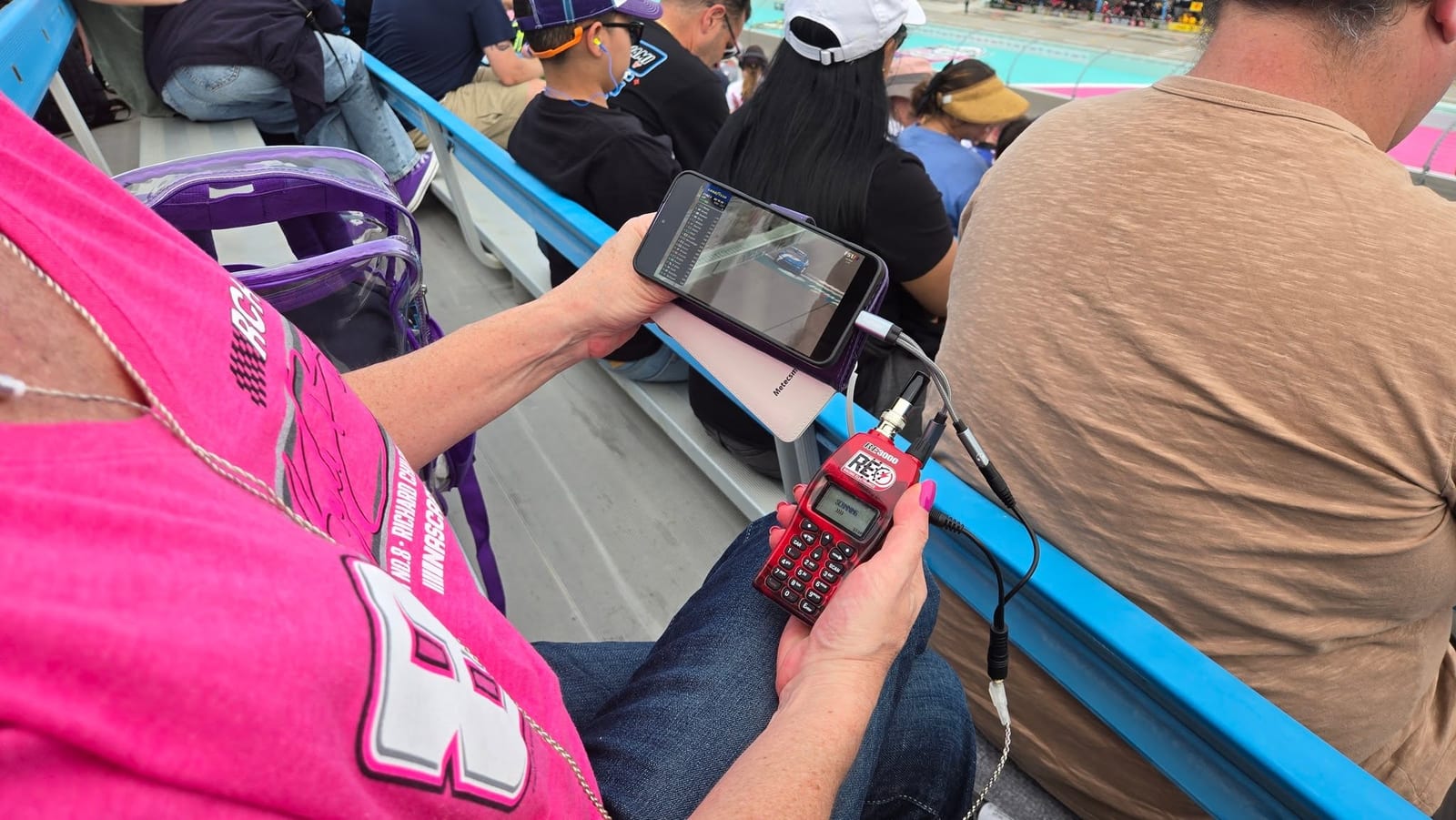
To tackle this, we built a dedicated dual-stream audio-visual monitoring station right in our grandstand seats.
The Hardware Configuration:
- Live Video Feed: Smartphone streaming the high-definition Fox Sports 1 (FS1) live broadcast feed.
- Track Connectivity: Connected to the venue’s public Verizon Fan Wi-Fi network. High-density stadium environments normally suffer from severe congestion, packet drop, and video buffering when tens of thousands of fans connect simultaneously. At Homestead-Miami, the Verizon carrier deployment performed flawlessly: rock-solid 1080p stream with zero buffering or dropped frames throughout all three stages.
- Audio Integration: A custom USB-C to 3.5mm headphone splitter routed the live television broadcast audio into our primary input.
- Scanner Telemetry: The secondary input was fed directly from a Racing Electronics RE3000 scanner programmed to team channels (monitoring Kyle Busch’s #8 RCR communications and spotter frequencies).
- Headset Output: Both streams merged cleanly into noise-isolating over-ear headsets, giving us instant television commentary in one ear and direct crew chief calls in the other.
Trackside Takeaways for Race Weekend
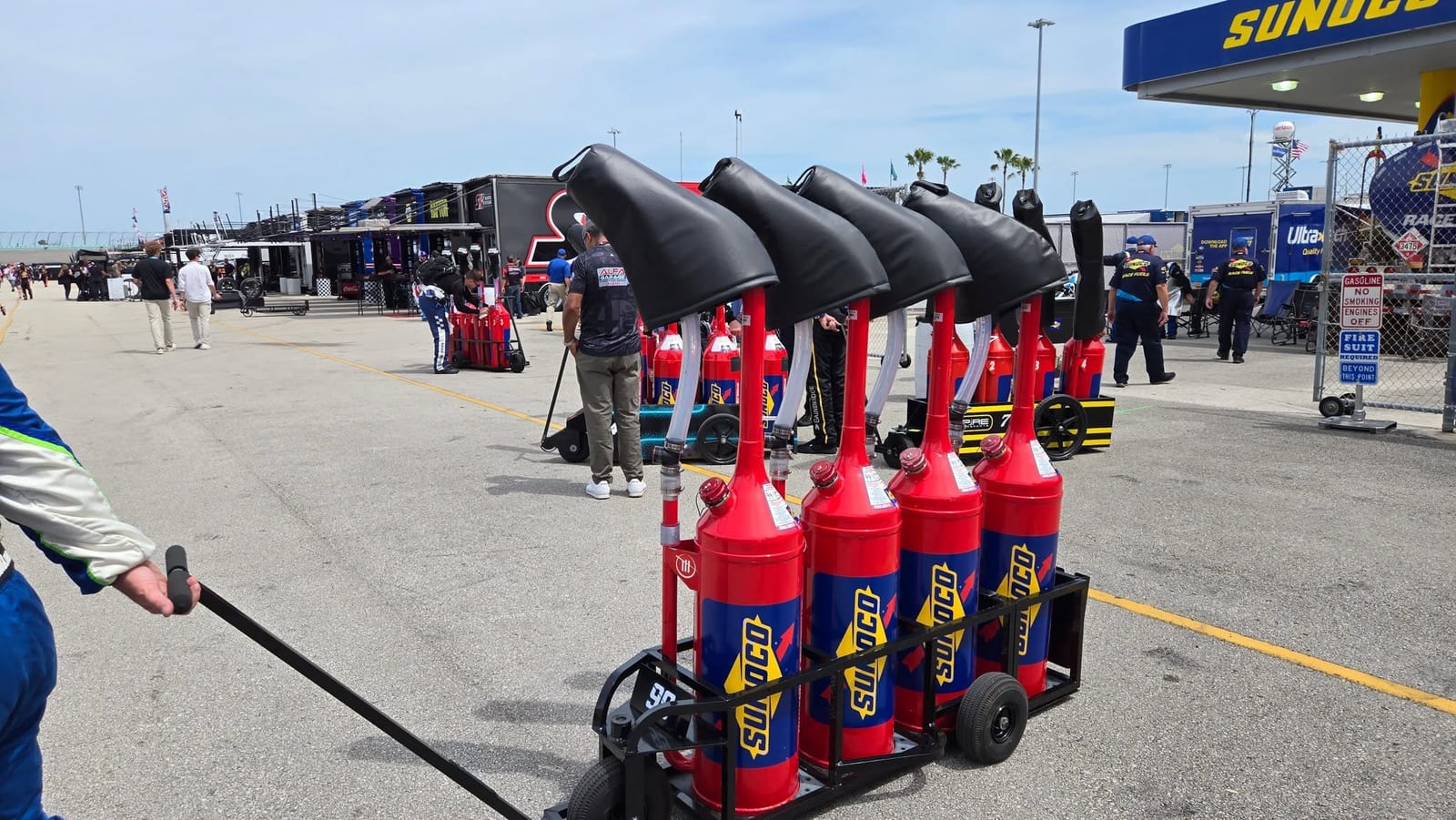
- Garage Pass Protocol: Always follow hot pit rules strictly. Closed-toe shoes are mandatory, and you must maintain constant situational awareness for rolling tire carts, fuel barrels, and push-back cars moving without running engines.
- Network Reliability: You cannot rely on cellular LTE/5G in packed stadium grandstands. Logging into the venue’s authenticated high-capacity Wi-Fi network makes the difference between real-time timing telemetry and complete radio silence.
- Audio Splitter Utility: Carrying a simple analog headphone splitter turns a standard smartphone and scanner into an unbeatable race-tracking rig that out-performs expensive rental monitors.